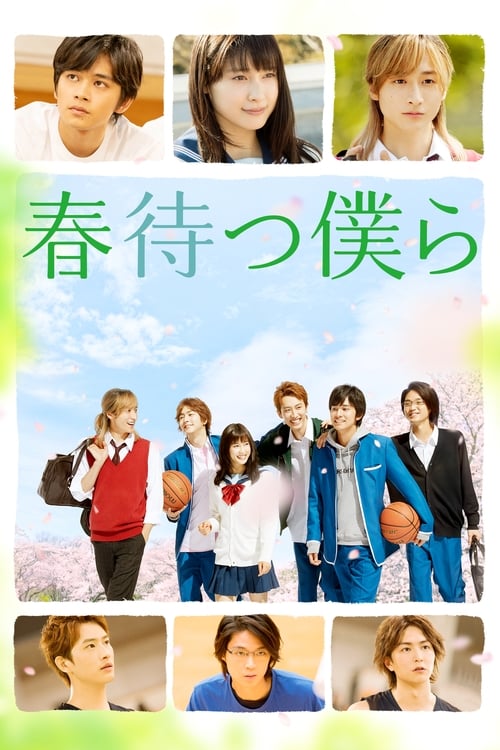
Waiting For Spring
Plot
Mitsuki is shy and rather isolated at school. Towa is on the basketball team and Mitsuki's class-mate. Due to circumstances, Mitsuki soon begins to socialize with four jocks of the basketball team, which affects her self-esteem, her social status, her loneliness and her life. She finds a new lease in her school life.
Get the Weekly Woke Watchlist
New and trending movies scored for woke bias, preachy messaging, and forced political themes — before you waste your evening.
No spam. One useful email per week.
Overall Series Review
Categorical Breakdown
The movie is a Japanese production set in a Japanese high school, featuring an ethnically and culturally authentic Japanese cast. The plot revolves around a universal theme of a shy student overcoming isolation through personal connections, which judges characters by the content of their soul and merit (friendship, basketball skill), not immutable characteristics or intersectional hierarchy. There is no evidence of forced diversity or lecture on privilege.
The film is a celebration of youth, friendship, and romance within a contemporary Japanese high school setting. It is categorized as a 'feel-good fiesta' that uses the vibrant setting of school and cafe life as a positive backdrop for character development. There is no hostility or demonization directed toward Japanese culture, institutions, or ancestors, rendering the category's criteria for 'civilizational self-hatred' irrelevant or absent.
The main character, Mitsuki, begins as shy and isolated, showing clear character flaws and room for growth, which prevents her from being an instant 'Mary Sue.' The male leads are depicted as 'a squad of individuals with quirks and vulnerabilities' and are the catalyst for the female lead's positive change and socialization. Masculinity is presented as protective and social, not toxic or emasculated. The narrative centers on a normative teen romance and friendship, not anti-natalist messaging.
The core of the story is a classic, normative heterosexual teen-romance involving a girl and four male friends, which develops into a love triangle between Mitsuki, Towa Asakura, and her childhood friend, Aya Kamiyama. The narrative structure is entirely focused on traditional male-female pairing. There is no known inclusion of alternative sexual ideologies, focus on gender theory, or deconstruction of the nuclear family structure.
As a youth romance and sports drama, the movie's thematic focus is entirely on friendship, love, and personal development within a high school setting. There is no mention of or hostility toward religion, specifically Christianity, as the narrative does not touch upon spiritual or theological debates. Morality is centered on personal virtue, loyalty, and empathy, aligning with a transcendent moral law based on human connection.
Get the Weekly Woke Watchlist
New and trending movies scored for woke bias, preachy messaging, and forced political themes — before you waste your evening.
No spam. One useful email per week.