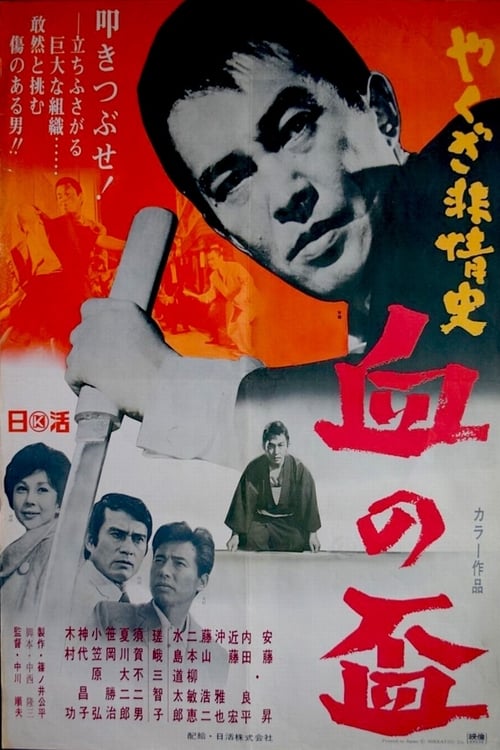
Fill the Cup with Blood
Plot
Second delivery in the "Yakuza Hijoshi" series. The protagonist, played by Ando Noboru, is torn between the organization and his old friends.
Get the Weekly Woke Watchlist
New and trending movies scored for woke bias, preachy messaging, and forced political themes — before you waste your evening.
No spam. One useful email per week.
Overall Series Review
Categorical Breakdown
Characters are judged solely on their personal choices, loyalty, and capacity for violence, the foundational principles of the yakuza code. The cast is entirely ethnically authentic to the setting and the plot contains no discussion or critique related to race, ethnicity, or immutable characteristics in a modern, intersectional sense. Meritocracy is absolute—a gangster's standing is based on strength and commitment to the organization’s code.
The film is a deep immersion into a specific, non-Western, and traditionally-structured Japanese subculture (the yakuza). The entire conflict is internal to Japanese society, focusing on honor codes and the criminal underworld. The narrative concerns the preservation of traditional yakuza 'family' structures and codes of loyalty, directly expressing an intense preoccupation with an internal, national social dynamic, not a hostility toward it or the West.
The yakuza genre is overwhelmingly focused on male-to-male bonds, loyalty, and ritualized violence. While women appear, they are relegated to supportive roles—often as geishas, tragic mistresses, or wives—who are central to the hero's personal life but not to the central power conflict of the organization. The drama entirely centers on the struggle of masculinity; there is no 'Girl Boss' trope, anti-natalist messaging, or emasculation of the male protagonist.
The core thematic conflict revolves around the highly-gendered, normative male-to-male bonds of the yakuza 'family' structure, which mirrors traditional Japanese family patriarchy. The film contains no evidence of sexual ideology being centered, deconstructing the nuclear family, or lecturing on alternative sexualities or gender theory.
The moral framework of the film is determined by the objective-yet-criminal code of the yakuza—an unbending system of duty, punishment, and loyalty. The drama is driven by the breaking of this code, which functions as a form of rigid moral law. The narrative does not contain hostility toward religion, specifically Christianity, and operates within a clear, transcendent moral universe defined by honor and consequence, not subjective power dynamics.
Get the Weekly Woke Watchlist
New and trending movies scored for woke bias, preachy messaging, and forced political themes — before you waste your evening.
No spam. One useful email per week.