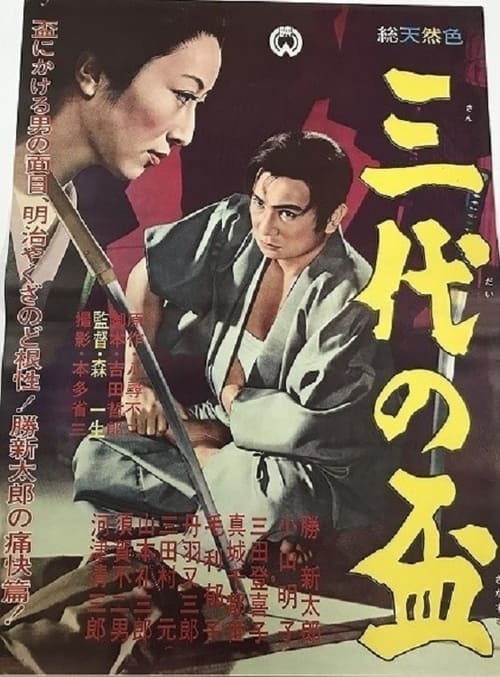
Third Generation's Loyalty Offering
Plot
1962 Japanese movie. Remake of Mori's 1942 original movie
Get the Weekly Woke Watchlist
New and trending movies scored for woke bias, preachy messaging, and forced political themes — before you waste your evening.
No spam. One useful email per week.
Overall Series Review
Categorical Breakdown
The film is a historical drama based on a Japanese national legend and features an entirely ethnically and historically authentic Japanese cast, focusing on the concepts of traditional feudal class, honor, and loyalty. Character merit is the sole driving force of the narrative, and the story contains no elements of modern race or identity politics.
The central action celebrates a core ancestral act of extreme loyalty and honor, a highly revered national epic that views institution (the samurai code) as a shield against chaos. However, some historical analysis suggests the post-WWII film adaptation includes a subtle critique of the cruelty and corruption of the rigid feudal system (the Shogunate) that *forced* the samurai's sacrifice, questioning the system rather than the heroes' action. This internal cultural criticism slightly raises the score from a perfect 1.
The narrative is overwhelmingly centered on male duty and the samurai code. Female characters operate in traditional, complementary roles as wives and mothers who support the male protagonists' mission of vengeance and honor. There are no 'Girl Boss' tropes, no emasculation of males, and no messaging that attacks motherhood or traditional family structure.
As a 1962 Japanese historical epic set in the 18th century, the film adheres to a normative structure, with the nuclear family and traditional male-female pairings being the unquestioned standard. The central conflict revolves around masculine honor and duty. There is no presence of alternative sexual ideology, deconstruction of the family unit, or gender theory lecturing.
The narrative is driven by the samurai code of honor and loyalty, *bushido*, which acts as an objective, transcendent moral law that supersedes the corrupt or unfair decree of the Shogunate. Faith or traditional religion is not a primary focus, but it is acknowledged as a source of strength, and there is no hostility toward religious belief or the demonization of religious characters.
Get the Weekly Woke Watchlist
New and trending movies scored for woke bias, preachy messaging, and forced political themes — before you waste your evening.
No spam. One useful email per week.