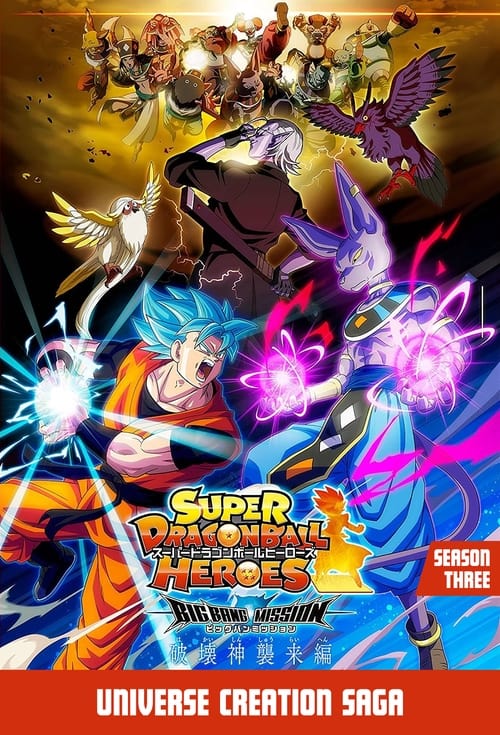
Super Dragon Ball Heroes
Season 3 Analysis
Season Overview
No specific overview for this season.
Season Review
Categorical Breakdown
The entire narrative is built on the universal meritocracy of power levels, transformations, and fighting ability, not immutable characteristics. Characters are judged solely on their strength, skill, and moral alignment. There is no presence of intersectional hierarchy, vilification of specific demographics, or race-swapping; the casting is consistent with established franchise canon.
The central conflict involves the heroes fighting to protect their home universe and entire space-time from catastrophic destruction planned by cosmic villains. There is no critique, hostility, or framing of their home culture or civilization as fundamentally corrupt or racist. The narrative embraces the defense of one’s family, friends, and reality, aligning with gratitude and preservation.
The core of the series remains centered on male Saiyan protagonists like Goku and Vegeta achieving new power-ups. The most prominent female character is the antagonist of the Ultra God Mission arc, Aeos, a powerful Supreme Kai of Time, but her power is an established cosmic role, not a 'Girl Boss' trope intended to emasculate the male heroes. The female representation is proportional to the genre, with no anti-natalist or anti-family messaging present.
The story is a pure action spectacle focused on fights for the fate of the universe. Sexual identity is never a theme, a point of character exploration, or a narrative focus. The structure is normative, focused on action and power without any exploration or lecturing on alternative sexualities or gender theory.
The antagonists are cosmic villains like the mad scientist Fu and a rogue deity, Aeos, the former Supreme Kai of Time, who uses the gods' own rules (a tournament to erase timelines) for destructive ends. This is a conflict against corrupt or destructive cosmic authority figures, not a condemnation of traditional, organized religion or an endorsement of moral relativism. The heroes fight for a clear objective moral good—saving all reality.