The Gift
Plot
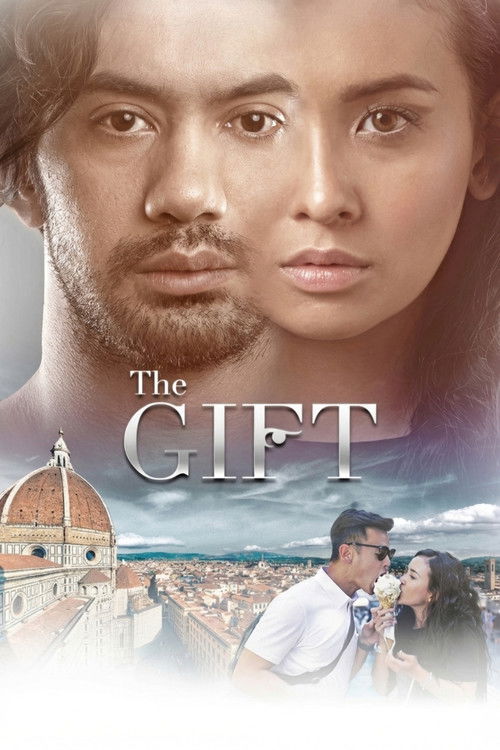
When novelist Tiana falls in love with a visually impaired Harun on her 30th birthday, little she knew that her childhood friend, Arie, now an established surgeon, was going to propose to her on the same day. What unfolds thereafter is three humans beings endeavor to redefine love and human disability.
Get the Weekly Woke Watchlist
New and trending movies scored for woke bias, preachy messaging, and forced political themes — before you waste your evening.
No spam. One useful email per week.
Overall Series Review
Categorical Breakdown
The plot's central conflict revolves around a love triangle and the personal struggle of a man with a disability, a theme of 'human disability' that judges characters by their inner emotional state and capacity for love, not race or intersectional hierarchy. The main characters are all of the same ethnicity.
The film is set in the cultural capital of Yogyakarta, Indonesia, with local language and settings featuring prominently. While the film has been noted for critiquing the 'vengeful, judgmental' aspects of Indonesian society, this is a specific social criticism, not a wholesale demonization of the home culture or ancestors.
The female protagonist, Tiana, is a working novelist under pressure from her publisher and serves as the catalyst for the male protagonist's emotional and personal rehabilitation. This positions her as a strong, autonomous woman whose presence helps 'fix' the emotionally withdrawn man, leaning slightly into a mild 'Girl Boss' trope, but there is no explicit anti-natalist or widespread emasculation messaging.
The narrative centers entirely on a traditional heterosexual love triangle and the formation of a conventional male-female relationship. There is no presence of alternative sexual ideologies, focus on gender theory, or deconstruction of the nuclear family unit.
The director has a history of exploring sensitive religious issues in an Indonesian context, but the film's core message focuses on personal, transcendent themes like self-forgiveness and moving past a dark secret. The moral struggle is framed as personal and internal, not as a direct assault on traditional religion or an embrace of moral relativism.
Get the Weekly Woke Watchlist
New and trending movies scored for woke bias, preachy messaging, and forced political themes — before you waste your evening.
No spam. One useful email per week.