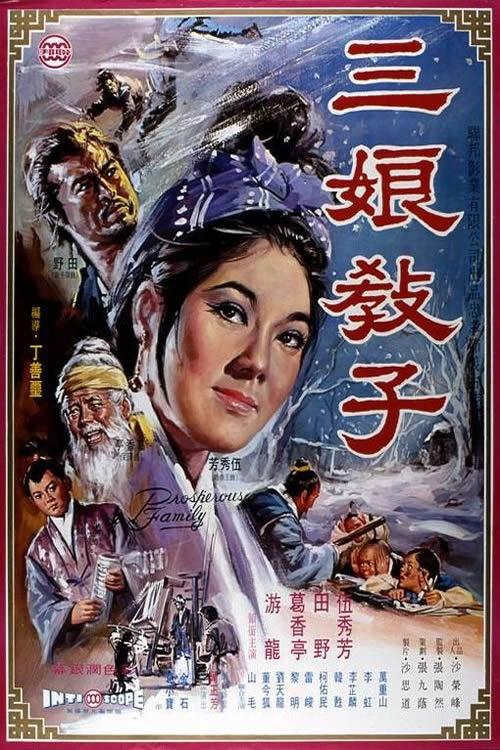
Prosperous of Family
Plot
Get the Weekly Woke Watchlist
New and trending movies scored for woke bias, preachy messaging, and forced political themes — before you waste your evening.
No spam. One useful email per week.
Overall Series Review
Categorical Breakdown
The plot focuses entirely on the personal morality, dedication, and academic merit of the main characters. The central theme of a mother’s diligence in raising her son to succeed in the imperial examination system is a clear endorsement of meritocracy and character over immutable characteristics. The narrative features an ethnically authentic cast and setting, with no forced diversity or vilification of any group based on race.
The purpose of the story is to promote the truth, goodness, and beauty inherent in traditional Chinese society and to praise the moral deeds of ancestors. The narrative is a tribute to the family institution and the ethical-educational system of Chinese culture, viewing these structures as essential for civilizational prosperity. The story exhibits no self-hatred toward its own home, heritage, or ancestors.
The main character, the Third Mistress (San Niang), is celebrated for her tireless labor (spinning and weaving) and her singular focus on educating her son. Her authority and devotion as a mother and educator are the driving, heroic forces of the entire narrative. The story explicitly validates the profound fulfillment and societal importance of the traditional female role, placing motherhood on a high pedestal rather than depicting it as a prison.
The narrative’s entire structure is centered on the nuclear family unit and the traditional relationship between a mother and her son, with a clear emphasis on filial piety and the continuation of the family line. Sexuality is not a plot point, and there is no presence of alternative sexual ideologies, deconstruction of the family, or commentary on gender theory. The traditional male-female pairing is the established, normative structure of the family.
As a classic moral tale intended to be didactic and inspirational, the film's entire purpose is to promote virtue, moral conduct, and a higher moral law. The story operates within a framework of objective truth and ethical principles (likely Confucian or Buddhist influence in the cultural context), which serves as the source of strength and guidance for the characters. There is no hostility toward traditional religion or embrace of moral relativism.
Get the Weekly Woke Watchlist
New and trending movies scored for woke bias, preachy messaging, and forced political themes — before you waste your evening.
No spam. One useful email per week.