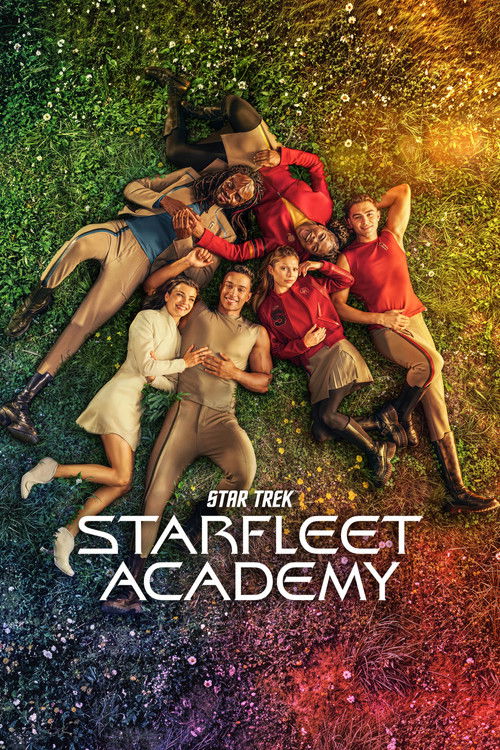
Star Trek: Starfleet Academy
Season 1 Analysis
Season Overview
A young group of Starfleet cadets navigating friendships and rivalries, as well as first loves and a new enemy that poses a threat not to just the Academy, but to the Federation. And, in between all that drama, they strive to meet the standards of their exacting instructors.
Season Review
Categorical Breakdown
The casting is centered on a diverse ensemble of cadets, and the senior leadership is dominated by women and non-white characters, which aligns with the ‘forced insertion of diversity’ element of the definition. The creators explicitly state the series champions diversity and representation for the 'generation now.' The plot features a central cadet whose mother was a victim of an unjust Starfleet system, which frames the Federation’s past as having systemic flaws requiring correction, prioritizing a social justice narrative over pure character meritocracy.
The series is set after the institutional collapse known as 'The Burn,' and a main plot point involves the Academy's new Chancellor working to correct her own past mistake of enforcing a rigid Starfleet policy that unjustly imprisoned a cadet’s mother. The narrative is about the current generation of Starfleet learning from and rebuilding a Federation that was nearly destroyed by a ‘systemic failure,’ thereby framing the 'home culture' and its past institutions as fundamentally flawed and in need of ideological correction.
Top authority figures, including the Chancellor of Starfleet Academy and the no-nonsense Commander, are powerful and highly competent female characters. The series is heavily female-led, which places female power and competence at the center of the story. The young female cadets are shown to be highly capable and 'effortlessly dedicated,' fitting the ‘Girl Boss’ trope where women hold superior moral and intellectual positions relative to some of the male characters, who are sometimes depicted as bumbling or overly aggressive/whiny.
The show is widely described by reviewers as ‘effortlessly inclusive,’ and the promotion emphasizes themes of diversity and representation, which in contemporary media strongly suggests the incorporation and centering of alternative sexualities and gender ideology. The focus on a 'teen drama' structure often includes the normalization and centering of diverse sexual identities, indicating a narrative where sexual identity is an important, public character trait rather than a private matter or a normative structure.
As with most of modern Star Trek, the series operates in a post-religious, secular humanist world. There is no specific hostility toward traditional religion mentioned, but the moral framework is entirely secular, grounded in principles like 'empathy, unity, and peacemaking,' which replaces the concept of a ‘higher moral law’ with a system of collective, subjective humanistic ethics. This avoids the high score for active vilification but fully embraces a moral vacuum relative to transcendent morality.