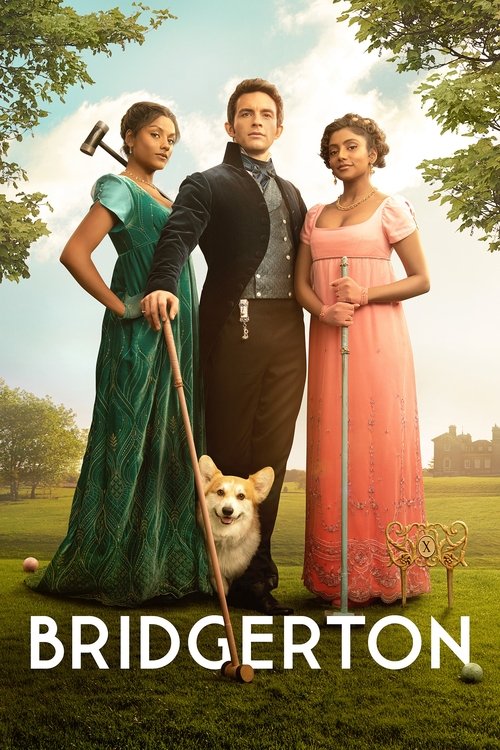
Bridgerton
Season 2 Analysis
Season Overview
Duty, desire and scandal collide when Viscount Anthony Bridgerton decides to marry, only to meet his match in his intended bride's headstrong big sister.
Season Review
Categorical Breakdown
The lead family for the season, the Sharmas, are cast as South Asian in a historically white British aristocracy, a form of historical 'race-swapping.' The series establishes its fantasy world as one where high society is post-racial due to Queen Charlotte's fictional background, thus allowing for the forced insertion of diversity without requiring the plot to address systemic oppression. The female protagonist's Indian heritage is highlighted positively through cultural elements, which is a key part of her identity, but the narrative does not exist purely to lecture on privilege.
The setting is presented as an anachronistic 'Regency Fantasy' complete with modern music and historically false racial integration, deliberately disrupting the Western historical context. The core conflict involves a critique of the British social institution of the marriage market, which is repeatedly framed as restrictive and oppressive, particularly to women. The alternative is not 'Noble Savage' foreign culture, but the lead female's Indian heritage is shown as a positive element that conflicts with the constraints of English society.
The female leads are consistently portrayed as highly competent, intellectual, and morally superior, especially when contrasted with the male protagonist's initial bumbling and duty-driven approach. The narrative includes the younger sister Eloise as an outspoken character whose entire storyline revolves around rejecting marriage and motherhood in favor of intellectual pursuit, which is a classic anti-natalist 'career is the only fulfillment' trope.
The main plot is entirely centered on a traditional male-female pairing which ultimately leads to marriage and family. Overt LGBTQ+ plotlines, such as a perceived queer-baiting subplot from the prior season, are notably dropped or minimized. Sexual ideology is present mainly through the promotion of pre-marital passion and explicit content which de-centers traditional sexual morality, but the core romantic structure remains normative.
The series presents a secular moral landscape where right and wrong are defined by social decorum, honor, personal passion, and the judgment of a gossip sheet. Faith and the established Church are entirely absent from the emotional and moral core of the drama, despite the historical setting being fundamentally Christian. This removal of a transcendent moral law creates a spiritual vacuum, suggesting that morality is a subjective matter of power dynamics and social maneuvering rather than objective truth.