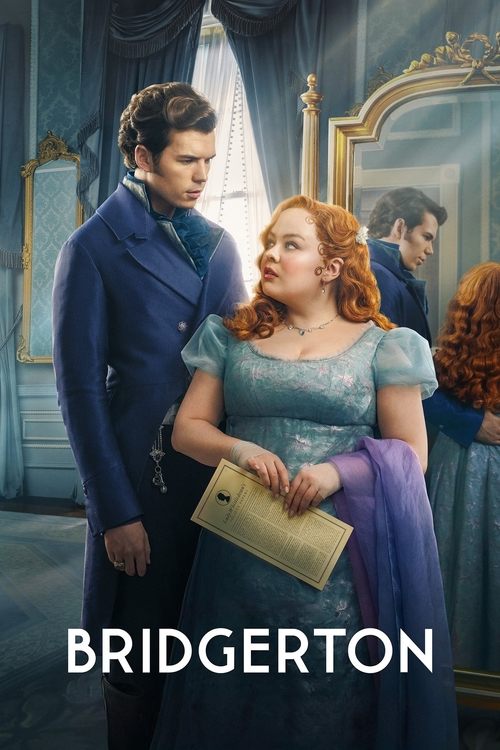
Bridgerton
Season 3 Analysis
Season Overview
As a new crop of debutantes yearns to become the brightest of the ball, a wallflower with a double life finds her light amid secrets and surprises.
Season Review
Categorical Breakdown
The series is built upon the foundational premise of 'historical race-swapping' in the highest aristocratic circles, which is maintained and reinforced this season. The casting is intentionally colorblind to create a 'revolutionarily inclusive' fantasy world. Characters of color hold positions of immense historical power, such as the Queen, by design. This world-building prioritizes intersectional representation over historical authenticity.
The plot's central conflict frames the Western, aristocratic Regency world ('the ton') as an inherently corrupt, oppressive, and restricting system. The female protagonist's major achievement is creating a mechanism (Lady Whistledown) to hold this society, its ancestors, and the monarchy to account and assert power over them. The entire dramatic engine is fueled by fighting against the established institutions and social codes of her own culture.
The main female lead is a 'Girl Boss' figure whose secret media career is portrayed as the only path for a woman to gain a voice and real power in the world. The show presents marriage not as the sole fulfillment but as something she achieves while maintaining her superior professional identity. The main male love interest is depicted as a 'perfect feminist' man who is not challenged by his wife's success and even defends women's liberation, often emasculating the traditional 'hero' role.
The season directly introduces an explicit 'queer turn' storyline with a major supporting character, Benedict Bridgerton, who explores alternative sexual identities and polyamory. This is accompanied by dialogue that explicitly reframes human affection as 'A feeling between two people, whatever their sex,' deconstructing the normative male-female pairing as the only valid structure and signaling a clear agenda for a 'more inclusive fantasy.'
The core drama revolves around social rules, power dynamics, and societal opinion rather than religious or spiritual law. The show's moral framework is entirely secular and relativistic, focusing on individual identity and liberation. There is no overt vilification of Christianity, but faith is functionally absent, replaced entirely by the critique of social class, reflecting a spiritual vacuum and focus on subjective, modern morality.