Songs of Solomon
Plot
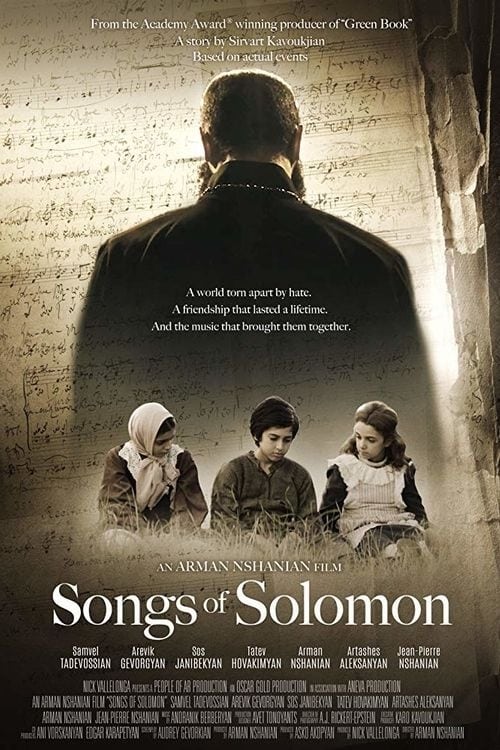
Inspired by true events, this is a film about a childhood friendship, torn apart by the horrific Hamidian massacres infiltrated by the Ottoman Empire under the rule of Sultan Abdul Hamid II (1894-1896).
Get the Weekly Woke Watchlist
New and trending movies scored for woke bias, preachy messaging, and forced political themes — before you waste your evening.
No spam. One useful email per week.
Overall Series Review
Categorical Breakdown
The narrative is fundamentally driven by group identity—Armenian Christian versus Ottoman Turk—as the basis for violent conflict and systemic oppression. This is a historically authentic depiction of persecution based on immutable ethnic and religious characteristics, not a narrative contrived to vilify 'whiteness' or inject forced diversity into a Western context. The story is a historical tragedy, not a modern political lecture.
The film functions as a tribute to and celebration of Armenian culture, music, and heritage. The protagonist, Komitas Vardabet, is depicted as the 'savior of Armenian music.' Institutions like the family and the Armenian Church are shown as vital shields and sources of strength against external chaos and extermination. There is gratitude and respect for the culture and ancestors.
The focus of the historical drama is on the male figure Komitas Vardabet, and the general community suffering during the genocide. There is no evidence of 'Girl Boss' tropes, emasculation of male characters, or anti-natalist messaging. Female characters occupy complementary and traditional roles authentic to the historical setting, such as the protagonist's grandmother and childhood friends.
The plot is a straightforward historical and biographical drama about ethnic and religious persecution. The film remains centered on normative male-female pairing and the nuclear family structure within the context of the 1890s Ottoman Empire. There is no inclusion of alternative sexualities, queer theory, or lecturing on gender ideology.
The movie is described as having a 'Very strong Christian worldview with very strong moral values.' The protagonist is an Armenian Christian priest/archbishop, and the Christian faith is explicitly portrayed as a core identity and source of strength for the persecuted people. Traditional religion is treated as a positive and transcendent moral foundation.
Get the Weekly Woke Watchlist
New and trending movies scored for woke bias, preachy messaging, and forced political themes — before you waste your evening.
No spam. One useful email per week.