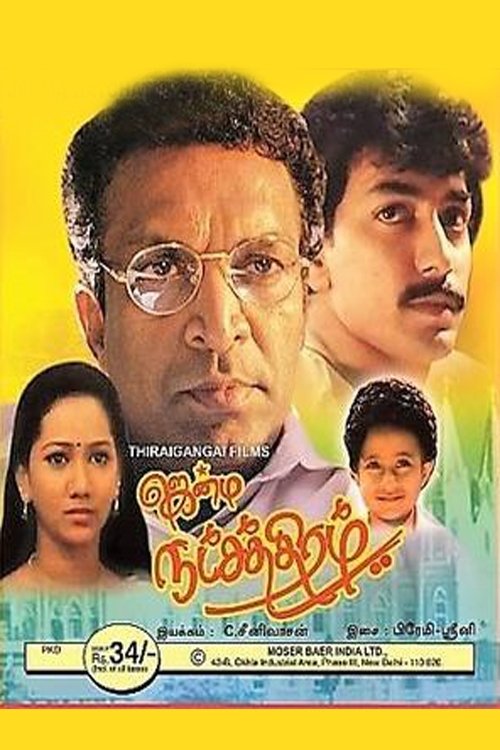
Jenma Natchathiram
Plot
After a man loses his child, he adopts a baby. Few years later, when he discovers that the baby is the devil incarnate, he decides to kill him.
Get the Weekly Woke Watchlist
New and trending movies scored for woke bias, preachy messaging, and forced political themes — before you waste your evening.
No spam. One useful email per week.
Overall Series Review
Categorical Breakdown
The central conflict is spiritual in nature, focusing on the child's supernatural evil rather than any immutable characteristic like race, class, or gender. Characters are defined by their moral or spiritual alignment, upholding a universal meritocracy of the soul. No political lecturing on privilege or forced diversity is present.
The entire dramatic premise involves fighting a supernatural evil to protect the traditional institutions of family and religious order. Figures of faith provide the necessary knowledge and means to combat the demonic force. The narrative respects the sacrifices of ancestors and views traditional faith as the only shield against chaos.
Gender dynamics are traditional; the wife's role as mother is central to the tragedy as she unknowingly raises the devil's son. The story focuses on the man's protective struggle to save his family and the world. There is no 'Girl Boss' trope, and the nuclear family is framed as the structure targeted for destruction by the evil, affirming its importance.
The core relationship is a normative male-female pairing whose family unit is corrupted by the Antichrist. The film does not feature any alternative sexualities, nor does it contain any messaging that deconstructs the nuclear family outside of the supernatural plot point of the devil's son invading the home. Sexuality remains private and a non-issue.
The film's plot explicitly affirms a transcendent moral order, as the conflict is literally God/Good vs. Satan/Evil. Religious figures like Father Murphy and a Swami serve as the moral compass and a source of strength. Faith and religious concepts are the means by which the hero is guided to fight the objective evil.
Get the Weekly Woke Watchlist
New and trending movies scored for woke bias, preachy messaging, and forced political themes — before you waste your evening.
No spam. One useful email per week.