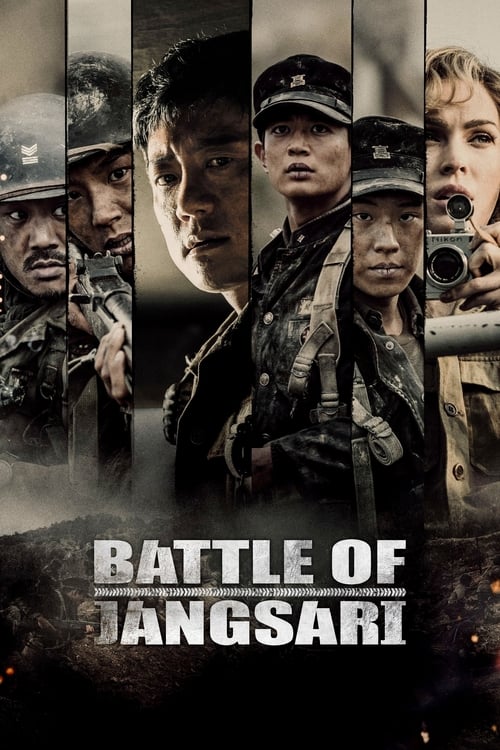
Battle of Jangsari
Plot
Korean War, September 1950. In order to fight the enemy forces based in the South of the peninsula, General MacArthur orders the start of the Incheon Landing Operation, deploying diversionary attacks in other locations. Without real military forces to spare, 772 very young Korean student soldiers, barely trained, are sent to Jangsari Beach, where they will face a heroic fate and discover the value of friendship. (A sequel to Operation Chromite, released in 2016.)
Get the Weekly Woke Watchlist
New and trending movies scored for woke bias, preachy messaging, and forced political themes — before you waste your evening.
No spam. One useful email per week.
Overall Series Review
Categorical Breakdown
The central narrative focuses on the student soldiers' common sacrifice and character merit, not on race or intersectional hierarchy. The main characters are Korean, and their heroism is the primary subject. The American (white) characters are minor supporting roles, and while one American general is depicted with indifference toward the student soldiers' plight, this is a commentary on military bureaucracy and a lack of support, not a systemic vilification of "whiteness." The North Korean antagonist is made sympathetic, which shifts the focus to the tragedy of war and ideology over racial conflict.
The film acts as a solemn and grateful homage to the student soldiers who sacrificed their lives for the nation of South Korea. It is a story of national defense and honor, celebrating the ancestors’ heroism and respecting the institution of the nation under threat. The narrative does not frame South Korean culture or heritage as fundamentally corrupt or racist, but rather as something worth defending against communist invasion.
The main female characters are an American reporter and a South Korean student soldier who has to shave her head and disguise herself as a man to participate in the battle. The female soldier's arc of entering a male sphere is achieved by conforming to a male identity, and her character is underdeveloped, serving as a plot point of sacrifice, which does not suggest a 'Girl Boss' trope. The film’s emotional core often invokes the image of the mother/family (crying for mothers), which is anti-anti-natalist and complementary.
The narrative centers on the male-dominated, traditional structure of a military operation during a historical war. There is no evidence of centering alternative sexualities, deconstructing the nuclear family, or promoting gender ideology in the plot or character development. The presence of a female soldier in disguise does not function as an argument for gender theory, but as a traditional dramatic device of sacrifice.
The film is a secular war story focused on the objective moral concepts of duty, sacrifice, and courage. There is no open hostility toward religion (Christianity or otherwise) or any characters depicted as bigoted or evil due to their faith. The morality depicted is transcendent, with the stakes involving a moral cause (defending the South) and the higher law of self-sacrifice.
Get the Weekly Woke Watchlist
New and trending movies scored for woke bias, preachy messaging, and forced political themes — before you waste your evening.
No spam. One useful email per week.