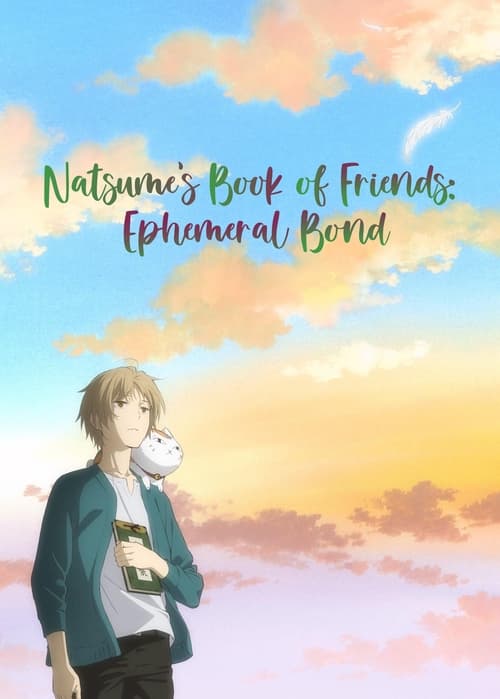
Natsume's Book of Friends the Movie: Ephemeral Bond
Plot
Natsume has been busy, navigating between humans and Yokai when he coincidentally reunites with an old classmate, Yuki. It brings back painful memories of a certain Yokai. Meanwhile, Natsume also became acquainted with Yorie Tsumura, a woman in the memories of a Yokai whose name he had returned. Yorie knew much about Reiko, but now lived a peaceful life with her only son, Mukuo. Being with this family was comforting for Natsume, but apparently a mysterious Yokai has been lurking in their town. On the way back from investigating, a “Yokai seed” that had latched itself to Nyanko Sensei drops into the Fujiwaras’ garden and grows overnight into a fruit tree. When Nyanko Sensei eats a fruit that is somehow shaped like himself, he suddenly splits into three!
Get the Weekly Woke Watchlist
New and trending movies scored for woke bias, preachy messaging, and forced political themes — before you waste your evening.
No spam. One useful email per week.
Overall Series Review
Categorical Breakdown
The movie is a work of Japanese fantasy centered on Japanese characters and folklore. Characters are judged solely by their actions, their kindness, and their spiritual nature, which applies equally to both humans and Yokai. There are no discussions of race, privilege, systemic oppression, or forced diversity. The protagonist, Natsume, is defined entirely by his inner character and his unique spiritual ability.
The setting is a rural Japanese town, depicted with pastoral animation and a serene atmosphere that honors the cultural backdrop. The narrative is immersed in traditional Japanese folklore (Yokai, Kami). The themes promote acceptance and respect for the spiritual beliefs and the world of the ancestors, showing a profound connection to the home culture and its traditions, rather than hostility toward them.
Gender dynamics are complementary, focusing on relational bonds rather than competition. Natsume's grandmother, Reiko, is a powerful figure of the past, while the central female character in the movie, Yorie Tsumura, is an elderly woman whose core emotional arc is rooted in her enduring love and grief for her son. This plot point is profoundly centered on motherhood and the search for family comfort, entirely avoiding 'Girl Boss' tropes or anti-natalist messaging.
The story's relationships are overwhelmingly platonic or familial, centered on Natsume's journey for belonging with the kind Fujiwara foster couple and his spiritual bonds with Yokai. There is no presentation or promotion of alternative sexual ideologies, deconstruction of the nuclear family, or focus on gender theory. The structure is normative, presenting traditional family and bonds as the source of Natsume’s stability.
The entire plot is steeped in the supernatural and the transcendent world of Yokai and spiritual power. The existence of a spiritual realm, along with the concept of moral obligation—Natsume's quest to free the Yokai names—establishes a transcendent moral framework. The story respects and is built upon Japanese traditional beliefs and folklore, displaying no hostility toward religion or a higher moral law.
Get the Weekly Woke Watchlist
New and trending movies scored for woke bias, preachy messaging, and forced political themes — before you waste your evening.
No spam. One useful email per week.