Loki
Season 2 Analysis
Season Overview
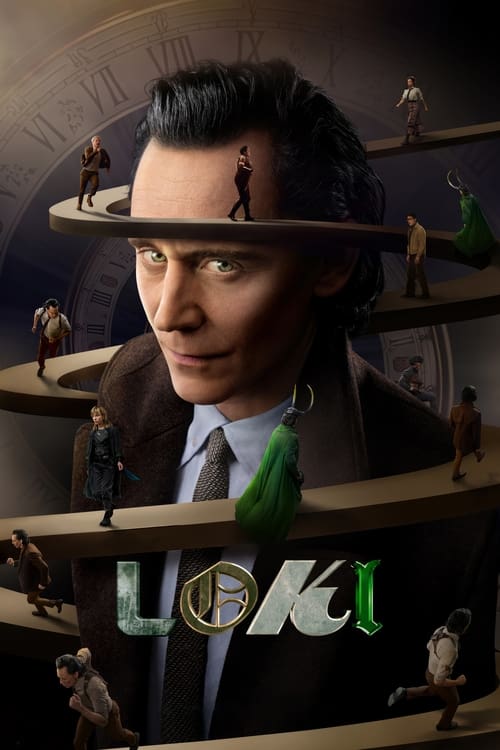
In the aftermath of Season 1, Loki finds himself in a battle for the soul of the Time Variance Authority. Along with Mobius, Hunter B-15 and a team of new and returning characters, Loki navigates an ever-expanding and increasingly dangerous multiverse in search of Sylvie, Judge Renslayer, Miss Minutes and the truth of what it means to possess free will and glorious purpose.
Season Review
Categorical Breakdown
The core conflict revolves around the philosophical questions of free will versus a pre-determined fate, centering on character merit and individual responsibility. The main hero is a white male who achieves ultimate purpose through self-sacrifice. The supporting cast is highly diverse across races and genders, including an Asian scientist and a black female moral leader, but characters’ immutable characteristics are not the source of their conflict or competence. The main antagonist is a non-white male variant.
The entire premise involves the TVA, an institution that stands for absolute, authoritarian control over all time and reality. The show frames this fundamental institution as a corrupt, lying organization that must be deconstructed. The main characters, by revealing the TVA's true history, actively reject the founding authority. However, the narrative ultimately concludes with a profound act of self-sacrifice to not destroy reality, but to stabilize and thus reform the system, preventing a full rejection of order.
Female characters hold significant positions of power: Hunter B-15 is promoted to a respected Judge and serves as a moral compass, and Ravonna Renslayer functions as a key authoritarian antagonist. However, the season significantly reduces the narrative role and screen time of the primary female protagonist, Sylvie (Lady Loki), in favor of a male-centric team including Loki, Mobius, and O.B. The story focuses on the male hero's emotional maturation and self-sacrifice, without depicting male supporting characters as bumbling or incompetent. The subject of motherhood or anti-natalism is absent.
The character Loki is canonically gender-fluid in the source material, a detail which appeared on his TVA file in Season 1. However, the plot of Season 2 contains no explicit discussion of gender identity, transitioning, or alternative sexualities. Loki is presented exclusively as a male character throughout the series, and the show's focus is on his relationship with his female variant, Sylvie. Sexual identity is entirely secondary to the search for purpose and free will.
The story's ultimate authority, He Who Remains/The Time-Keepers, is revealed to be a human fraud, which functions as a critique of false, secular, authoritarian power, not an attack on traditional religion. The ending culminates in the hero's acceptance of an immense burden and self-sacrifice for the greater good of the multiverse. This narrative conclusion champions a form of transcendent morality and purpose over a morally relative or nihilistic worldview.