Misbehaviour
Plot
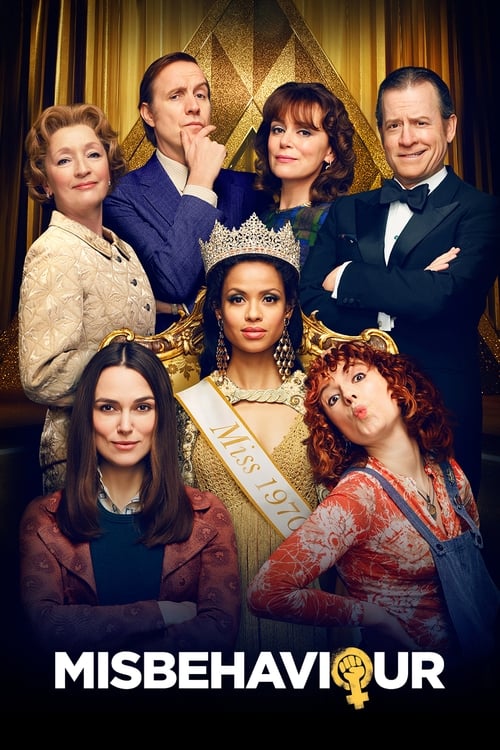
A group of women involved in the Women's Liberation Movement hatched a plan to invade the stage and disrupt the live broadcast at the 1970 Miss World competition in London, resulting in overnight fame for the newly-formed organization. When the show resumed, the results caused an uproar and turned the Western ideal of beauty on its head.
Get the Weekly Woke Watchlist
New and trending movies scored for woke bias, preachy messaging, and forced political themes — before you waste your evening.
No spam. One useful email per week.
Overall Series Review
Categorical Breakdown
The narrative is deliberately constructed around the concept of intersectionality, centering the experiences of women based on race, class, and gender in opposition to a white patriarchal system. The movie explicitly makes racial oppression and systemic racism central to the plot through the stories of Miss Grenada and Miss Africa South. The white male establishment figures are overwhelmingly characterized as chauvinistic, incompetent, or 'hiss-able' villains representing the oppressive status quo.
The film functions as a critique of mid-century British culture and institutions, framing the popular Miss World pageant as a vile ritual of female objectification that needs to be torn down. The core Western home culture is presented as fundamentally sexist, though the protest is ultimately about changing that culture rather than complete civilizational rejection. Key British figures like the host Bob Hope are satirized as embarrassing and corrupt symbols of the system.
The plot's entire engine is the Women's Liberation Movement's protest against the pageant. Female leads are presented as morally and intellectually superior to the male characters who are consistently portrayed as bumbling idiots, sexist pigs, or passive figures. One male character is praised only for 'doing childcare without complaint.' The plot champions the rejection of traditional female roles in favor of career and radical political action.
The narrative's focus remains squarely on gender roles and racial issues within a heterosexual framework. The film does not incorporate queer theory, non-traditional sexual or gender identities, or a critique of the nuclear family beyond the generalized feminist rejection of patriarchal structure. Sexual identity politics are absent from the core themes.
There is no significant religious theme in the film. The conflict is secular, social, and political, centered on feminism, sexism, and racism. The movie does not criticize Christianity or promote moral relativism over objective moral law; the moral law is assumed to be the equality championed by the activists.
Get the Weekly Woke Watchlist
New and trending movies scored for woke bias, preachy messaging, and forced political themes — before you waste your evening.
No spam. One useful email per week.