Three Thousand Years of Longing
Plot
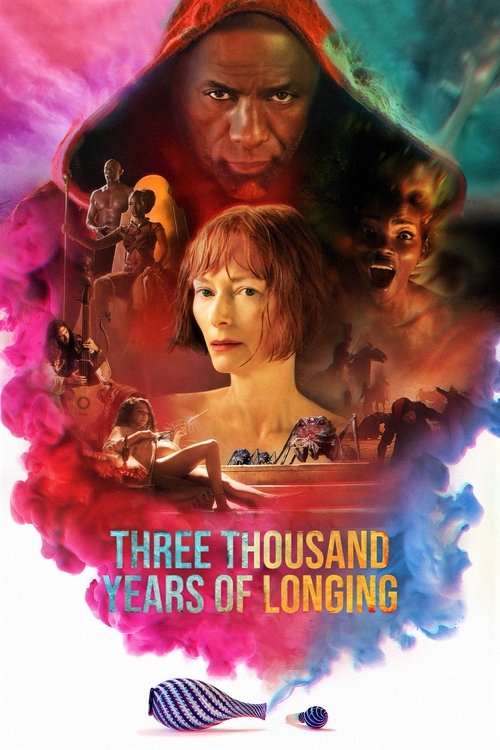
A solitary scholar discovers an ancient bottle while on a trip to Istanbul and unleashes a djinn who offers her three wishes. Filled with reluctance, she is unable to come up with one, so the djinn tries to inspire her with his stories.
Get the Weekly Woke Watchlist
New and trending movies scored for woke bias, preachy messaging, and forced political themes — before you waste your evening.
No spam. One useful email per week.
Overall Series Review
Categorical Breakdown
The plot centers on a relationship between a 'pale British scholar' and a 'dusky genie.' The narrative uses this contrast to explore issues of 'equity' and 'imperialism,' framing the Djinn as a thrice-incarcerated figure whose history embodies the 'ceaseless game of power.' When the couple attempts to live in the West, the modern, white, British setting is immediately shown to be unwelcoming, where the non-white character encounters 'neighborhood racial prejudice.' The Western protagonist's emotional awakening is facilitated by the non-Western character, fitting the trope of a white character being 'saved' by an 'othered' figure.
The Djinn’s flashback stories are 'opulently designed to favor the Orient,' celebrating the rich mythology, passion, and vitality of non-Western cultures throughout history. In sharp contrast, the Western home culture of modern London is depicted as a place of emotional isolation, racial hostility, scientific realism, and technological sterility, which drains the life and magic out of the Djinn. The narrative suggests that the West is emotionally and spiritually lacking, which necessitates the Djinn's occasional retreat to his own realm.
The protagonist, Alithea, is an independent, successful, non-maternal academic who specializes in narratology. The story's core conflict is that her contentment is a form of self-repression, and her true fulfillment is only achieved when she is 'awakened' to love and desire by the male Djinn. While she is not a flawless 'Girl Boss,' her arc positions her established career as secondary to finding romantic connection. Women in the Djinn's past stories are often powerful queens or scholars but are frequently shown to be confined or victimized by patriarchal systems, which serves as a commentary on historical male dominance.
The story focuses exclusively on heterosexual dynamics, which include the primary relationship and the various historical male-female pairings in the Djinn's tales (Queen of Sheba, Sultan's concubines). The narrative does not contain overt themes related to alternative sexualities, gender ideology, or the deconstruction of the nuclear family.
The film explores the nature of 'storytelling' by grouping mythology, fairy tales, and religion together as human narratives that help 'explain the unknown.' The modern scientific, rational world is pitted against the desire for magic and story. This theme does not vilify Christianity directly but treats all traditional faith structures, including the religious figures referenced in the Djinn's tales (like King Solomon), as simply part of the human need for 'story' over objective truth. This framing leans toward moral relativism by positioning desire and subjective narrative as the central human 'transcendent' forces.
Get the Weekly Woke Watchlist
New and trending movies scored for woke bias, preachy messaging, and forced political themes — before you waste your evening.
No spam. One useful email per week.