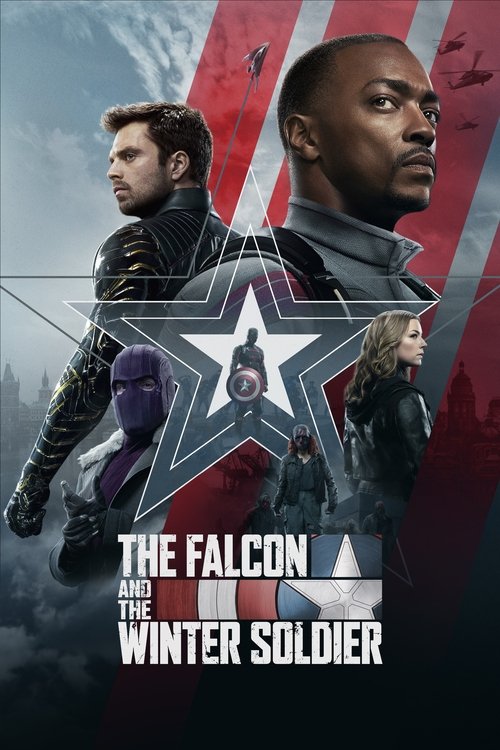
The Falcon and the Winter Soldier
Season 1 Analysis
Season Overview
No specific overview for this season.
Season Review
Categorical Breakdown
The plot centers on Sam Wilson's race-based struggle to accept the Captain America mantle, a clear focus on immutable characteristics over universal meritocracy. A key narrative feature is the story of Isaiah Bradley, which directly lectures on systemic oppression and the vilification of whiteness, contrasting the celebrated white hero Steve Rogers with the erased and tortured Black hero. The white, government-appointed successor, John Walker, is depicted as incompetent and unstable, culminating in a public, brutal act of violence.
The narrative's central moral conflict is rooted in a fundamental hostility toward the U.S. national symbol and the institutions it represents. Isaiah Bradley explicitly states that the shield and its stars and stripes mean nothing good to him and that the country would never allow a self-respecting Black man to hold it. The U.S. government is shown to have orchestrated the torture and erasure of a war hero and the creation of a callous, bureaucratic Global Repatriation Council (GRC) that creates the central refugee crisis and the main villains.
Female characters are depicted as superior in competence and authority in key moments. The Dora Milaje, an all-female warrior group, effortlessly defeats both Sam Wilson, Bucky Barnes, and John Walker in combat. The primary villain, Karli Morgenthau, is a young female leader of a super-powered organization. Sharon Carter is revealed as the powerful and morally compromised Power Broker. The primary male leads are not bumbling idiots, but the theme emphasizes female capability and power over male. The portrayal of family life with Sam's sister, Sarah, is a grounded, positive anchor, which prevents a higher score.
The series focuses its political messaging entirely on race, institutional corruption, and nationalism. The narrative does not feature any centering of alternative sexualities, deconstruction of the nuclear family, or lecturing on gender theory. Traditional male-female pairing and a focus on Sam's family structure and legacy serve as a normative backdrop.
There is no direct hostility toward or critique of traditional religion, specifically Christianity. However, the show's moral framework is entirely secular and political. Morality is debated as a relativistic concept between the 'oppressive' Global Repatriation Council and the 'idealistic' terrorist Karli Morgenthau. Objective truth is represented only through political/historical indictment and Sam's final secular speech about 'doing better,' establishing a spiritual vacuum where the primary moral law is sociopolitical rather than transcendent.