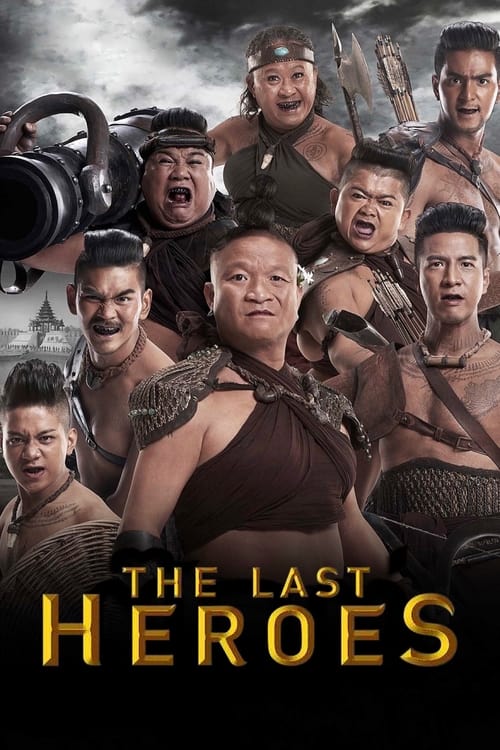
The Last Heroes
Plot
With enemy attacks looming, a group of villagers begins training for war to defend their homeland -- but becoming warriors brings humor and hardship.
Get the Weekly Woke Watchlist
New and trending movies scored for woke bias, preachy messaging, and forced political themes — before you waste your evening.
No spam. One useful email per week.
Overall Series Review
Categorical Breakdown
The narrative's focus is on local Thai villagers fighting the Burmese army in a historical context, centering on shared national destiny rather than racial or intersectional hierarchy. The cast is authentically Thai, and there is no vilification of 'whiteness' or forced diversity, as the context is not Western. Characters are judged by their willingness to fight and sacrifice, which aligns with meritocracy.
The entire plot revolves around a group of villagers training for war to defend their 'homeland' and 'nation' against an external enemy. The characters ultimately die like heroes in the defense of their village and country. This is a clear expression of gratitude and defense of core institutions against chaos, directly opposing civilizational self-hatred.
The core heroic group is male/transvestite, but the comedy stems from their incompetence and 'bumbling antics' while training to be 'warriors.' The narrative's male characters are initially weak but ultimately achieve a protective, heroic end. There is no explicit 'Girl Boss' or anti-natal messaging.
The film prominently features a group of transvestite (ตุ๊ด) characters as part of the core heroic team, a common trope in the director’s work. The plot uses this identity centrally for both comedy and heroism, including a scene where the heroes disguise themselves in ladies' clothes. This places a non-normative sexual/gender identity in a highly visible and essential role, giving it a high score in the Queer Theory lens, though it operates within a distinct Thai cultural comedy tradition, not a Western gender ideology lecture.
The story includes a Thai monk held captive in the Burmese king's palace who aids the heroes in their escape. The religious figure is portrayed positively as a source of assistance and part of the noble, righteous cause. This portrayal of faith is a source of strength and acknowledges a higher moral good in defending the country.
Get the Weekly Woke Watchlist
New and trending movies scored for woke bias, preachy messaging, and forced political themes — before you waste your evening.
No spam. One useful email per week.