Demon Slayer: Kimetsu no Yaiba
Season 5 Analysis
Season Overview
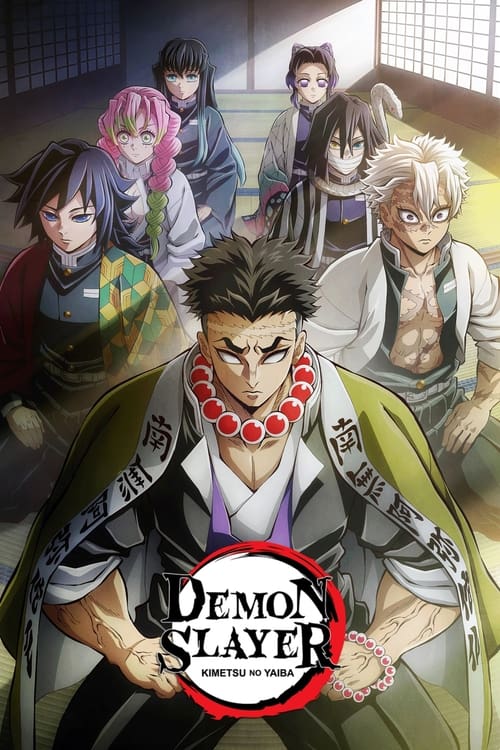
After a series of mighty clashes with Upper Rank Demons, the Ubuyashiki clan prepares for one last battle with the hellish forces of Muzan Kibutsuji. In order to finally defeat the Demon leader once and for all, the clan devises a training camp for the Demon Slayer Corps, one led by the remaining Hashira - the most elite warriors in the organization. Each Hashira forms a specialized exercise that will hone both their own abilities and the skills of the ordinary soldiers. Tanjiro Kamado, a boy at the heart of the brewing conflict, recovers from wounds received in a recent fight. While his half-Demon sister Nezuko is studied by researchers like Shinobu Kochou, Tanjiro embarks to train with the Hashira, seeking mastery in each of their assigned areas of expertise to be best prepared for the coming war - skills vital to Tanjiro, as he has vowed to be the very warrior who will eliminate Muzan for good.
Season Review
Categorical Breakdown
Characters are judged by the content of their soul and their combat ability in the Hashira Training Arc. The story is a pure meritocracy; success is earned through grueling training and individual effort. The conflict is between humanity and demons, not between different human groups. There is no concept of 'whiteness' or forced diversity, as the cast is culturally and ethnically authentic to the historical Japanese setting. Individuals from all backgrounds within that culture (like Tanjiro the humble coal burner or the various high-born/low-born Hashira) rise based on their power and resolve to fight.
The plot's entire purpose is to protect the institutions and civilization of the human world (Meiji-era Japan) from the nihilistic chaos and annihilation embodied by the demon forces led by Muzan Kibutsuji. The Demon Slayer Corps and the Ubuyashiki clan are framed as an ancestral shield and institution of good against evil. There is deep respect for the sacrifices of previous generations of Demon Slayers.
Female characters like Mitsuri Kanroji (Love Hashira) and Shinobu Kochou (Insect Hashira) are elite warriors who command respect for their power and skills. They are distinct from the male characters, not copies of them, demonstrating a complementary dynamic. Mitsuri's strength, for instance, is rooted in a unique physiology, and she retains a feminine and loving personality. Shinobu is defined by her medical genius and calculated precision. Neither is a 'Mary Sue' as their skills are earned. The overall structure celebrates protective masculinity and powerful, distinct femininity. A score of 2 acknowledges the presence of powerful female 'Girl Boss' archetypes, but their power is earned, not instant.
The narrative adheres to a normative structure focused on the primary goal of defeating demons. Sexual identity is private and irrelevant to the plot's central themes of training, duty, and sacrifice. The focus is on traditional family bonds (e.g., Tanjiro and Nezuko's sibling relationship, the Shinazugawa brothers' conflict) and the surrogate family of the Demon Slayer Corps. There is no presence of queer theory or lecturing on gender ideology.
The story acknowledges a higher moral law: the destruction of demons is an objective good. The Demon Slayer Corps' efforts are driven by a transcendent morality, duty, and the spiritual conviction in their cause. The morality is not subjective; Muzan is absolute evil, and the Demon Slayers are the forces of good. The spiritual context is entirely Japanese mythology and religious/moral concepts; it shows no hostility to Christianity, as that faith is not a factor in the Meiji-era setting.