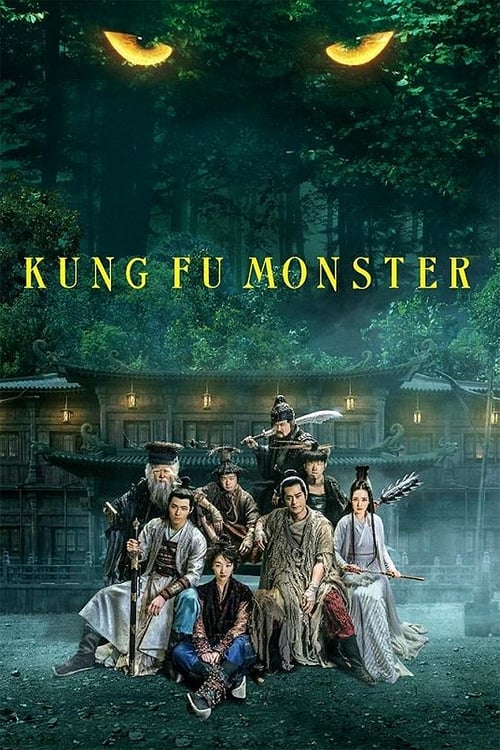
Kung Fu Monster
Plot
In the waning years of the Ming Dynasty, the Bruneian Empire offers a rare creature to the nation as a gift. Ocean, a member of the Imperial Secret Police, has been tasked to tame the beast. Though the furry beast appears ferocious on the outside, Ocean discovers that it is kind by nature. Not wanting to turn the beast into a killing machine on the battlefield, Ocean secretly releases the beast into the wild and elopes with Frigid, the daughter of a man executed on false charges.
Get the Weekly Woke Watchlist
New and trending movies scored for woke bias, preachy messaging, and forced political themes — before you waste your evening.
No spam. One useful email per week.
Overall Series Review
Categorical Breakdown
The film is a Chinese production with an entirely East Asian cast, making the vilification of 'whiteness' and forced diversity irrelevant to the plot. Characters are judged based on their moral alignment—kindness to the monster versus corruption and cruelty—not race or immutable characteristics.
The narrative’s primary target of criticism is the corruption and cruelty of the waning Ming Dynasty's imperial system and its officials, specifically the evil eunuch and the government's desire to exploit the gentle monster for war. This is a deconstruction of the *State* institution but not a hostility toward the broader Chinese culture or ancestors. The moral heroes are Chinese outlaws, not foreign or 'Noble Savage' proxies, except for the non-human monster itself.
Female characters like Frigid (Leng Bingbing) and Bella (Zhou Dongyu’s character) are competent, active plotters. Frigid uses guile to rescue her captured male paramour, reversing the typical damsel in distress trope. Bella is specifically noted in reviews as the character who evolves into the most compassionate and noble of the group. While not a complete emasculation of all males, the main hero is sidelined and needs a woman’s plan to be saved, and many supporting men are portrayed as bumbling idiots.
There are no signs of a queer theory lens, gender ideology, or centering of alternative sexualities. The main relationships are traditional male-female pairings. The primary villain is a eunuch, a historically specific governmental role that is not presented as a commentary on contemporary sexual identity.
The core morality revolves around compassion for an innocent creature versus the corrupting influence of power and state cruelty. This secular moral conflict does not target religion, specifically Christianity, or promote moral relativism. The focus is on a basic ethical choice (kindness over cruelty), which acts as a transcendent moral code separate from political evil.
Get the Weekly Woke Watchlist
New and trending movies scored for woke bias, preachy messaging, and forced political themes — before you waste your evening.
No spam. One useful email per week.