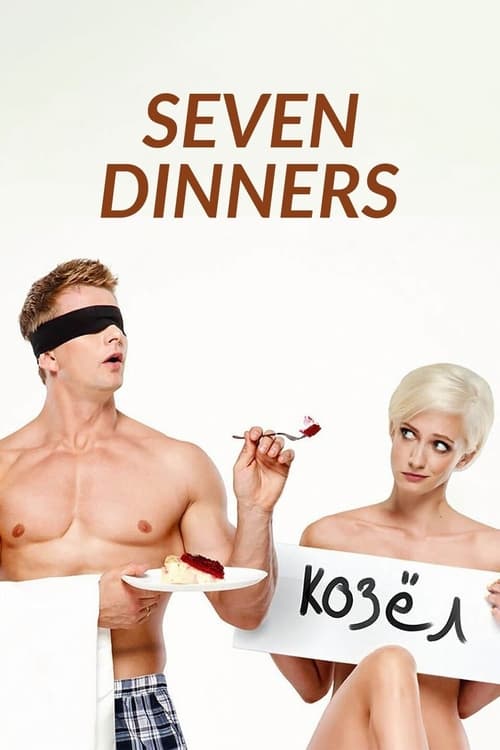
Seven Dinners
Plot
After five years of marriage, their relationships have come to a dead end – no kids, no common interests, almost no more love is left… When the wife asks for divorce, the husband tries the last remedy to cure their relationships – a scientific method known as "7 dinners"...
Get the Weekly Woke Watchlist
New and trending movies scored for woke bias, preachy messaging, and forced political themes — before you waste your evening.
No spam. One useful email per week.
Overall Series Review
Categorical Breakdown
The narrative focuses exclusively on the character merits and emotional struggles of a single, ethnically homogenous couple. Race, intersectional hierarchy, and systemic oppression are not factors in the central conflict or character development. Universal meritocracy is the standard, as the characters are judged by the content of their commitment to each other.
The film’s central goal is the strengthening and restoration of the family unit, which is portrayed as a positive institution and a source of stability. The movie's setting and cultural background do not feature any hostility toward the home country or its heritage; instead, it upholds a traditional societal pillar.
The wife initiates the divorce proceedings, demonstrating agency, but the narrative is fundamentally dedicated to restoring the marriage and addressing the explicitly mentioned problem of having 'no kids.' The film pushes for complementarianism and marital vitality, celebrating the married couple as the ideal end state, which counters anti-natalist and 'career-only' messaging.
The story is a straightforward heterosexual romantic comedy about a husband and wife attempting to save their marriage. The plot does not feature alternative sexualities, queer theory, or any deconstruction of the normative male-female pairing and nuclear family structure.
The film focuses on the emotional and psychological commitment required to save a marriage, reinforcing objective moral concepts like fidelity and commitment. The husband's method is referred to as a 'scientific method,' but this device serves a comedic, plot-driving function and does not lead to any vilification of traditional faith or the promotion of moral relativism.
Get the Weekly Woke Watchlist
New and trending movies scored for woke bias, preachy messaging, and forced political themes — before you waste your evening.
No spam. One useful email per week.