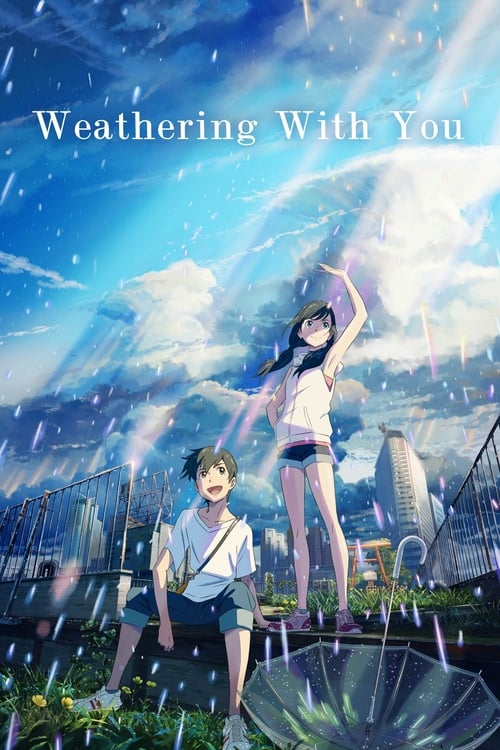
Weathering with You
Plot
The summer of his high school freshman year, Hodaka runs away from his remote island home to Tokyo, and quickly finds himself pushed to his financial and personal limits. The weather is unusually gloomy and rainy every day, as if taking its cue from his life. After many days of solitude, he finally finds work as a freelance writer for a mysterious occult magazine. Then, one day, Hodaka meets Hina on a busy street corner. This bright and strong-willed girl possesses a strange and wonderful ability: the power to stop the rain and clear the sky.
Get the Weekly Woke Watchlist
New and trending movies scored for woke bias, preachy messaging, and forced political themes — before you waste your evening.
No spam. One useful email per week.
Overall Series Review
Categorical Breakdown
The story is set in Japan and focuses on the universal struggles of poverty, social alienation, and running away from home. Race and intersectional characteristics are irrelevant to the plot and character motivations. Characters are judged solely by their emotional choices and personal merit.
The film does not critique or express hostility toward Western civilization, its culture, or its ancestors. The narrative does critique the modern system of Japanese society, specifically its collectivism, which attempts to exploit and eventually sacrifice the heroine for the common good. The protagonist's choice is a form of internal, anti-collectivist Japanese civilizational critique.
The female lead has a unique supernatural power, but she uses it in a self-sacrificial manner that depletes her life force to make others happy. This role directly counters the 'Girl Boss' trope. The male protagonist performs a highly masculine, protective action by fighting the police and the supernatural forces to save her life. The romance is a complementary male-female pairing, and the theme is centered on the sacredness of their bond, not career fulfillment or anti-natalism.
The core relationship is a traditional heterosexual romance. The narrative features no characters or plot points centering on alternative sexualities, gender ideology, or a critique of the nuclear family structure.
The story is based on Japanese spiritual beliefs, including Shinto-based concepts of transactional weather gods and human sacrifice for natural balance. The protagonists actively reject this specific spiritual 'Objective Truth' and the higher law it represents, choosing instead the subjective, individual truth of human love. This is a rejection of a specific capricious spiritual system's moral demands, not hostility toward Western monotheistic religion.
Get the Weekly Woke Watchlist
New and trending movies scored for woke bias, preachy messaging, and forced political themes — before you waste your evening.
No spam. One useful email per week.