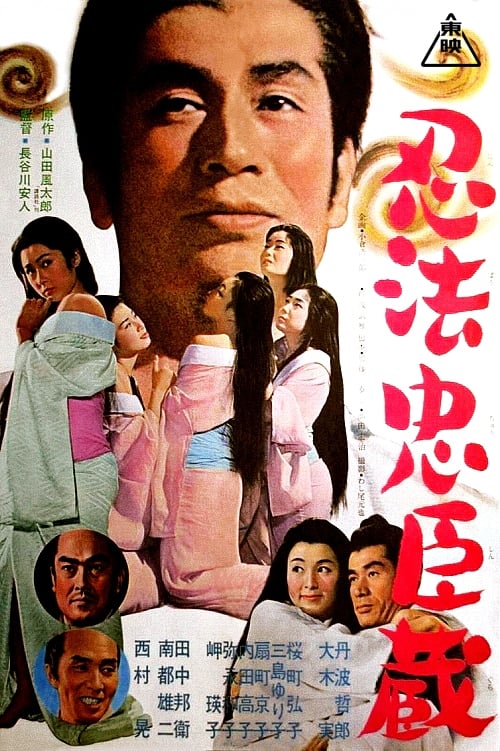
Tale of Ninja Duty
Plot
Mumyo Tsunataro killed his betrayed fiance Orie and He flees to Utsunomiya. On his way he happens to saves Chisaka Hyobu's daughter Oyu (She is exactly like Orie) be attacked by ninja. Thus he stays Chisaka's residence in Yonezawa. Chisaka was just trying to stop Forty-seven ronin's revenge against Kira Kozukenosuke by female ninja's sexual entrapment. Chisaka asks Tsunataro to lead female ninja. Tsunataro accepts the request on condition of marriage to Oyu.
Get the Weekly Woke Watchlist
New and trending movies scored for woke bias, preachy messaging, and forced political themes — before you waste your evening.
No spam. One useful email per week.
Overall Series Review
Categorical Breakdown
The movie is set in 17th or 18th century Japan, detailing the struggles between Japanese historical figures. The characters are judged solely on skill and loyalty to their respective lords or codes. There is no concept of vilification of 'whiteness' or forced diversity, as the cast and setting are historically authentic to feudal Japan.
The entire film is focused on an internal Japanese historical event, the famous revenge of the Forty-seven Ronin. The narrative is concerned with Japanese civilizational values of honor, duty, and vengeance. There is no anti-Western sentiment or civilizational self-hatred, as the Western world is not a factor in the plot.
The gender dynamics are explicitly anti-feminist and traditional. Female characters are central to the plot as instruments of sexual entrapment or as a transactional prize for the male protagonist's services. The leading man’s history includes murdering his betrayed fiancée. Masculinity is protective, violent, and transactional; women are seen as tools or rewards, not as 'Girl Boss' figures or instantly perfect heroes.
The narrative’s sexual focus is entirely on the heterosexual dynamics of marriage, betrayal, and the use of female sexual entrapment to achieve political ends. The story reinforces a normative male-female pairing as the standard and a key motivator for the hero's actions. There is no presence of alternative sexualities or gender ideology.
The central moral framework of the film is rooted in the objective moral code of feudal duty, revenge, and honor, which drives the actions of the protagonist and the opposing Ronin. The conflict is political and martial, not spiritual or religious. The movie displays no hostility toward religion and does not argue for moral relativism, adhering to the objective moral laws of the era’s conflict.
Get the Weekly Woke Watchlist
New and trending movies scored for woke bias, preachy messaging, and forced political themes — before you waste your evening.
No spam. One useful email per week.