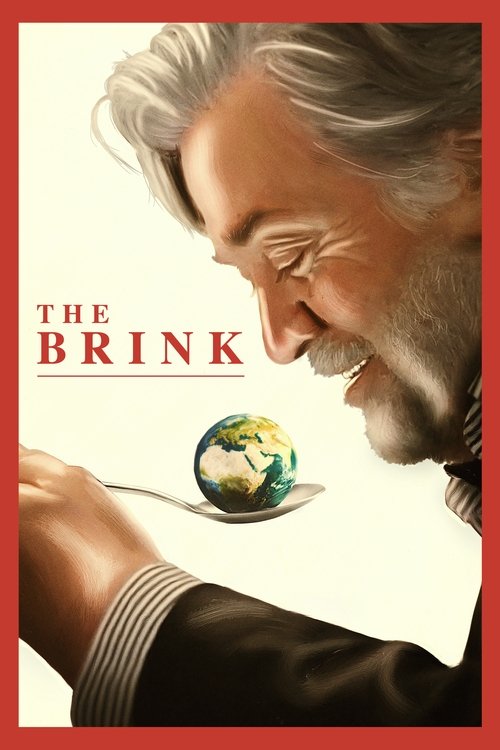
The Brink
Plot
Now unconstrained by an official post, Steve Bannon is free to peddle influence as a perceived kingmaker, who some say still has a direct line to the White House. After anointing himself leader of the “populist movement,” he travels around the North America and Europe spreading his hard-line anti-immigration message.
Get the Weekly Woke Watchlist
New and trending movies scored for woke bias, preachy messaging, and forced political themes — before you waste your evening.
No spam. One useful email per week.
Overall Series Review
Categorical Breakdown
The film's central subject and his political movement are founded on explicit identity-based messaging, promoting a hard-line nationalism that is anti-immigrant, anti-Islam, and involves perceived 'dog-whistle anti-Semitism.' The narrative critically exposes this ideology, effectively positioning the white male proponents of ethno-nationalism (Bannon and his allies) as the antagonists responsible for 'rot' and divisive politics. This structure critiques 'whiteness' as the source of a malign, global political force.
The documentary is a critical examination of an extreme nationalist and populist worldview that seeks to ‘save’ the West but which the film’s commentary and tone frame as deeply flawed, hateful, and dangerous. The film's title, alluding to the brink of destruction, and its narrative expose Bannon's project as a political pathology. A critical lens is placed on the core structures and ideologies Bannon employs, suggesting corruption in the 'Western home culture' rather than celebrating its institutions as shields against chaos.
The documentary’s director, Alison Klayman, and its producer are women, providing a powerful female lens to chronicle and expose a controversial male political figure. The film's positive figures include a female TV host, Susanna Reid, who confronts Bannon and forces him to answer difficult questions. Bannon is shown verbally abusing his male underlings and coming across as an 'ugly, nasty' figure, which serves as a negative, non-protective depiction of masculinity in power.
The core narrative of the film is strictly political, focusing on nationalism, anti-globalism, and immigration policy. The documentary contains no material that centers alternative sexualities, deconstructs the nuclear family, or lectures on gender ideology. Sexuality and gender dynamics are not significant themes in the content or its critical framing.
Bannon, the subject, frequently uses religious language, claiming he is doing 'the Lord's work' and referring to 'divine providence' in the political sphere. The film’s general critical tone, particularly when highlighting the negative aspects of his ideology like 'hate, fear, and rage,' implicitly challenges the divine justification of his mission, but it does not directly vilify traditional religion itself. The criticism is aimed at political exploitation, not a transcendent moral law.
Get the Weekly Woke Watchlist
New and trending movies scored for woke bias, preachy messaging, and forced political themes — before you waste your evening.
No spam. One useful email per week.