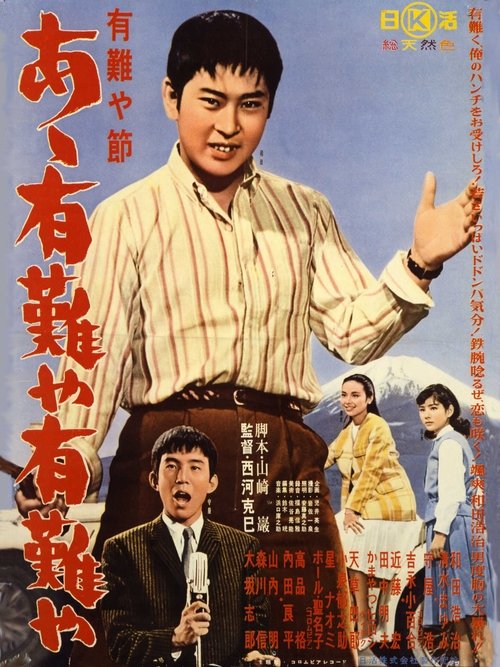
Doing What I Please
Plot
Koichi Haruyama, who works at the Morita Automobile Factory, was driving a convertible through Ginza in search of accident sites. He buys cars that have been damaged in accidents at a low price and scraps them for his own company. He uses the money he earns in this way to pay back Kanda Trading. Morita, the president of the company, is suspicious about the identity of Kanda Trading, from whom he borrowed money. However, what is borrowed must be repaid, and Koichi drives to Toyokawa to beg his grandfather for money as his scrap business is not going well. In addition to begging for money, Koichi has another secret purpose...
Get the Weekly Woke Watchlist
New and trending movies scored for woke bias, preachy messaging, and forced political themes — before you waste your evening.
No spam. One useful email per week.
Overall Series Review
Categorical Breakdown
The narrative focuses on a financial and personal conflict without regard to race or immutable characteristics. Koichi’s character and worth are judged entirely by his actions, his business acumen (or lack thereof), and his ability to settle his debt, which reflects a pure universal meritocracy. The plot contains no vilification of any specific group or forced diversity.
The movie is set within the world of post-war Japanese commerce and family structures, centering on a factory, the Ginza district, and a family home. The primary conflict is internal to the protagonist’s economic situation and family relationships. There is no indication of hostility toward the home culture, Western civilization, or ancestors. The journey to the grandfather suggests a respect for the established family structure.
The main characters explicitly mentioned (Koichi Haruyama, Mr. Morita, the grandfather) are male, and the plot is purely about a male-driven world of business, debt, and ambition. The narrative is heavily male-centric, which simply reflects the setting of a 1961 factory and financial plot. It does not feature 'Girl Boss' tropes or anti-natalism, but rather focuses on protective (or irresponsible) masculinity in a traditional context.
The plot contains zero elements of sexual ideology, alternative sexualities, or gender theory. The familial structure shown involves a grandson and his grandfather within a normative context. Sexuality and gender identity are not part of the conflict or the thematic structure of the film.
The plot is a secular story of financial debt, business dealings, and a family plea for money. There is no mention of religion, hostility toward Christianity, or the embrace of moral relativism. The core dilemma involves a strong sense of moral obligation (debt must be repaid) and personal ambition, acknowledging a basic objective truth about financial integrity.
Get the Weekly Woke Watchlist
New and trending movies scored for woke bias, preachy messaging, and forced political themes — before you waste your evening.
No spam. One useful email per week.