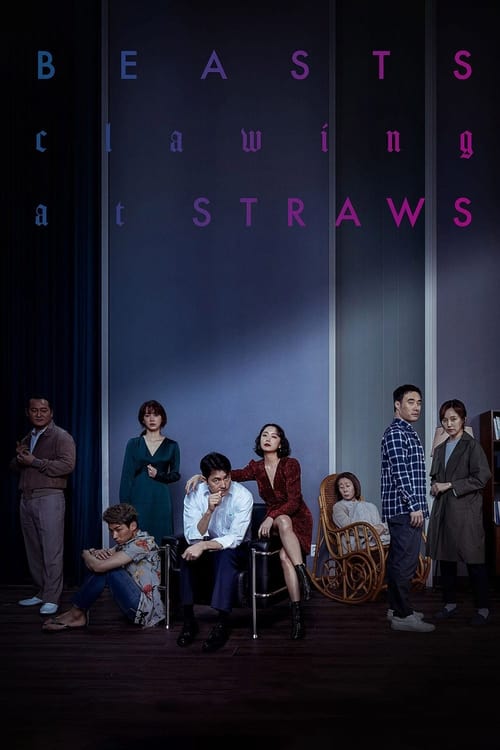
Beasts Clawing at Straws
Plot
A struggling restaurant owner, caring for his sick mom, finds a bag of cash in a sauna locker, while a customs officer gets into trouble when his girlfriend runs off with money he borrowed from a loan shark.
Get the Weekly Woke Watchlist
New and trending movies scored for woke bias, preachy messaging, and forced political themes — before you waste your evening.
No spam. One useful email per week.
Overall Series Review
Categorical Breakdown
Characters are judged solely by their financial desperation and criminal competence in securing the cash. The cast is all Korean, and the plot makes no reference to race, intersectional hierarchy, or the vilification of 'whiteness.' The conflict is purely about money and self-interest, upholding a meritocracy of criminal drive.
The film depicts a bleak, cynical underbelly of South Korean society filled with gangsters, loan sharks, and abuse. This grim portrayal functions as a critique of a society under the strain of debt and corruption, which is typical for the noir genre, rather than a broad, fundamental demonization of Korean heritage. The focus is on individual transactional crime, not civilizational self-hatred.
Female characters are highly active, such as Yeon-hee and Mi-ran, who are central figures in orchestrating murder and deception. They are driven by desperation and greed for money and freedom from male abuse, not political perfection. While a woman is a key, capable criminal mastermind, she is morally bankrupt and eventually faces a violent end, preventing the narrative from becoming a 'Girl Boss' lecture. The male characters are depicted as bumbling, desperate, or outright toxic, but this serves the crime plot's bleakness, not explicit emasculation.
The narrative contains no focus or mention of alternative sexualities or gender ideology. All relationships and family structures are presented as traditional, serving as background context for the characters' financial and criminal distress. The film avoids any lecturing on sexual identity or the deconstruction of the nuclear family.
The film operates in a world of absolute spiritual vacuum where only money matters. Morality is entirely subjective and transactional, but this is a characteristic of the neo-noir genre. There is no overt hostility toward or mention of organized religion, specifically Christianity. The characters are nihilistic due to material desperation, not theological opposition.
Get the Weekly Woke Watchlist
New and trending movies scored for woke bias, preachy messaging, and forced political themes — before you waste your evening.
No spam. One useful email per week.