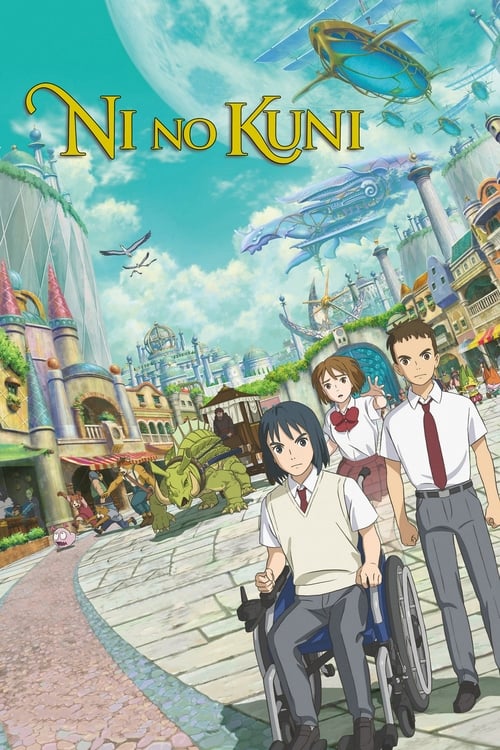
NiNoKuni
Plot
Adapted from the video game series of the same name, NiNoKuni follows high school peers Yuu and Haru who must travel between two separate yet parallel worlds to help save their childhood friend, Kotona, whose life is in danger. In this magical quest complicated by love, the three teens will be tasked with making the ultimate choice.
Get the Weekly Woke Watchlist
New and trending movies scored for woke bias, preachy messaging, and forced political themes — before you waste your evening.
No spam. One useful email per week.
Overall Series Review
Categorical Breakdown
The movie is a Japanese production with Japanese characters, making the premise of vilification of 'whiteness' or forced diversity irrelevant. The characters are judged by their actions, loyalty, and their moral decisions in a life-or-death scenario, demonstrating universal meritocracy. One protagonist is wheelchair-bound, but this is a character trait that informs his motivation and personal struggle, not a basis for political lecturing on systemic oppression or privilege.
The fantasy world, Ni no Kuni, is a place of magic, war, and moral peril, not a 'Noble Savage' utopia designed to demonize the home culture (Japan or the contemporary world). The protagonists fight to save the institutions and life within the parallel fantasy world (a princess and a kingdom), showing respect for the established order rather than hostility toward it. The conflict is a moral one, not a civilizational one.
The core female character, Kotona/Princess Astrid, is central to the plot as the one who needs saving, aligning with a traditional 'damsel-in-distress' trope, which is not a 'Girl Boss' depiction. The central emotional conflict is a love triangle between the two male friends over the girl. Masculinity is not maligned; one male lead is athletic and confident, and the other is a thoughtful, decisive hero. There is no anti-natalist or anti-family messaging.
The core emotional conflict is a traditional love triangle between a male character, a female character, and a second male character who harbors unrequited feelings for the female lead. The narrative centers on a normative, heterosexual structure. The 'soul mate' concept that links the two worlds is also based on a traditional male-female pairing (Kotona and Princess Astrid's soul is tied to the two male leads). There is no focus on alternative sexualities or gender ideology.
The film's central moral dilemma is a metaphysical one regarding the nature of life and death across parallel worlds, focusing on themes of sacrifice and transcendent morality (the ethical value of a single life). There are no overt references to traditional religion, no Christian characters are presented as villains or bigots, and the story maintains a clear sense of objective, high-stakes moral law related to the life-link between the worlds.
Get the Weekly Woke Watchlist
New and trending movies scored for woke bias, preachy messaging, and forced political themes — before you waste your evening.
No spam. One useful email per week.