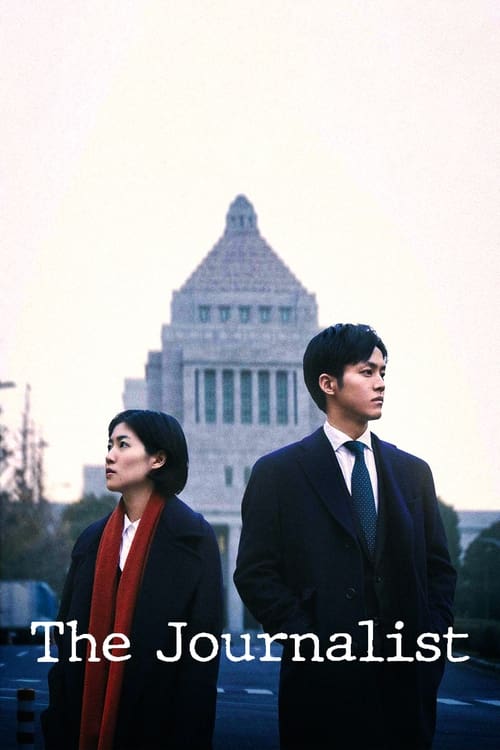
The Journalist
Plot
It is the job of the press to cover corporate crime, government plots and society. It is in this context that young female reporter on the beat Erika rolls up her sleeves and goes to work regarding what seems to be a government cover up. She is dealing with a government bureaucrat called Sugihara. It seems as if a clash is inevitable.
Get the Weekly Woke Watchlist
New and trending movies scored for woke bias, preachy messaging, and forced political themes — before you waste your evening.
No spam. One useful email per week.
Overall Series Review
Categorical Breakdown
The narrative conflict is entirely centered on the moral difference between honest people and corrupt politicians/bureaucrats, not on immutable characteristics or identity hierarchy. The characters are East Asian, and the plot is a meritocratic pursuit of journalistic truth, with character judgment based on a universal sense of right and wrong, not collective group identity.
The hostility is not directed at Japanese culture, ancestors, or fundamental civilizational values, but specifically at a corrupt contemporary political administration and its intelligence apparatus (CIRO). The film champions core civic institutions like the free press and government transparency, depicting them as forces that should act as shields against bureaucratic chaos and crime.
The female lead is a brave, capable, and highly driven journalist who is the hero of the story, succeeding in a male-dominated field. The film explicitly criticizes the 'implicit and explicit sexism' that marks Japanese society, and mentions a government effort to discredit a female victim of a scandal, scoring it higher than a low-level critique. However, the male lead is a sympathetic figure who is driven partly by the desire to provide for his family, including a baby on the way, which counters the anti-natalism/male-emasculation trope.
The plot is a political thriller focused on government corruption. There is no evidence in the core narrative or surrounding commentary that the story features or lectures on alternative sexualities, gender ideology, or the deconstruction of the nuclear family. The structure remains normative.
The film does not contain any religious themes. The moral conflict is framed as a struggle for 'truth' and 'justice' against a government's lies and manipulation, which implicitly acknowledges an objective moral standard rather than embracing moral relativism or being hostile toward any specific faith.
Get the Weekly Woke Watchlist
New and trending movies scored for woke bias, preachy messaging, and forced political themes — before you waste your evening.
No spam. One useful email per week.