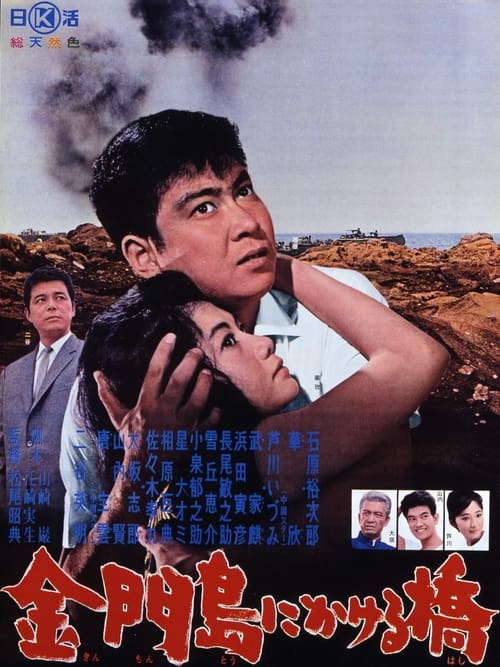
Rainbow Over Kinmon
Plot
Three years had passed since Ichiro Takeo left Japan. He was a young physician with a promising future, until his medical error caused the death of a big-shot politician. He was discharged from the hospital and had since sailed around the world as an on-board doctor. As he was about to reach the Taiwanese piers of Kinmon Island, thoughts of his days in Japan crossed his mind - he reminisced about the Taiwanese girl, Yan, who had scooped him out of his misery during the time of the medical accident. At times of war, the two rekindle an old flame.
Get the Weekly Woke Watchlist
New and trending movies scored for woke bias, preachy messaging, and forced political themes — before you waste your evening.
No spam. One useful email per week.
Overall Series Review
Categorical Breakdown
Character Ichiro Takeo's exile is driven by a failure of professional merit (medical error), not immutable characteristics. The narrative is a personal redemption story. There is no evidence of forced intersectional hierarchy or vilification of 'whiteness,' as the film is an East Asian production.
The protagonist leaves his home culture (Japan) due to a personal moral and professional failure, not because the culture is framed as fundamentally corrupt or racist. The theme is personal atonement, which views core institutions and morality as something to uphold. The setting is a struggle against an external war/conflict.
The female character, Yan, is introduced as a compassionate figure who helped the male lead in his misery. The dynamic centers on a 'rekindled old flame,' representing a traditional, complementary romantic partnership. There are no signs of 'Girl Boss' tropes, male emasculation, or anti-natalist messaging.
The entire plot centers on a traditional, heterosexual romance between Ichiro and Yan. The film's 1962 production date and genre suggest a normative structure. There is no focus on alternative sexualities, deconstruction of the nuclear family, or gender theory lecturing.
Ichiro's main character arc is one of atonement and seeking redemption for his moral and professional mistake, suggesting a belief in objective moral truth and higher law. The film is a Japanese drama, making anti-Christian themes irrelevant. The spiritual theme is built on personal responsibility and moral reckoning.
Get the Weekly Woke Watchlist
New and trending movies scored for woke bias, preachy messaging, and forced political themes — before you waste your evening.
No spam. One useful email per week.