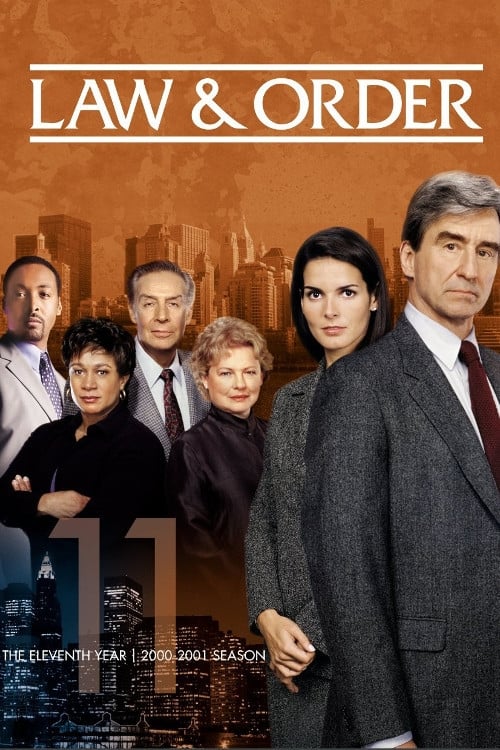
Law & Order
Season 11 Analysis
Season Overview
No specific overview for this season.
Season Review
Categorical Breakdown
Characters, regardless of race or gender, are defined by their competence within the police and legal system. Lieutenant Van Buren and Detective Green hold positions of authority based on their merit and experience. The narrative does not focus on privilege or systemic oppression as the source of crime; the focus is on universal criminal motivation and the application of law.
The series fundamentally upholds the institutions of the American justice system, with Detectives Briscoe and Green and the DA’s office working to bring chaos under control. The show is about the defense of social order and the rule of law, not a critique that frames Western civilization or its legal heritage as inherently corrupt or evil.
Competent women occupy the highest offices (DA Nora Lewin and Lt. Anita Van Buren). These women are professional authority figures and are not depicted as unrealistic 'Mary Sues.' Male characters like Jack McCoy and Lennie Briscoe are also depicted as competent and central to the plot. The narrative shows a complementarity of effort between genders in the workplace, without consistent emasculation of the male characters or messaging against motherhood/family life.
One episode, 'Phobia,' centers on the murder of a gay man and the kidnapping of his adopted son, where homophobia is explored as a motive. This places the issue of same-sex parenting at the heart of the legal drama. However, the episode's focus is on prosecuting the crime and the legitimacy of the gay couple's parenthood, not on promoting explicit queer or gender ideology or framing biological reality as bigotry. It represents a social issue being processed by the traditional legal system.
As is typical for the series, the moral and ethical debates are often resolved through pragmatic, secular legal reasoning by Jack McCoy and DA Lewin, implying moral relativism rather than a belief in objective, transcendent moral law. The show occasionally uses religious extremism or cults as sources of criminal motive, which sometimes frames traditional religion negatively, but it stops short of declaring faith itself the 'root of evil' or consistently using Christian characters as bigoted villains.