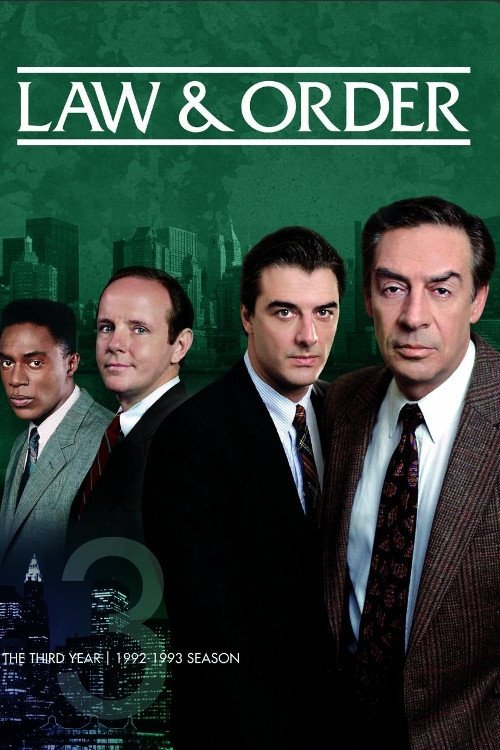
Law & Order
Season 3 Analysis
Season Overview
No specific overview for this season.
Season Review
Categorical Breakdown
The narrative frequently uses race, class, and immigrant status to generate legal and moral conflict. Episodes address a father's prejudice against his daughter dating a Latino and the exploitation of young, illegal immigrants in 'virtual slave' sweatshops. Another plot involves a shooting at an African-American Congress meeting where racial tension and community atmosphere are central to the case. Characters are often defined by their standing within these group dynamics, which pushes the score well into the upper-middle range for this category.
The series often frames its conflict by exposing corruption and hypocrisy within established American institutions, such as a major pacemaker manufacturer engaging in fraud, or the Navy attempting to cover up the death of a female officer. This shows hostility toward corrupt elements of the home culture but maintains an underlying faith in the institutional mechanism (the police and court system) to correct these wrongs. The tone is more institutional critique than civilizational self-hatred.
Gender dynamics are explored through episodes centered on female victimhood, such as a prominent recurring female character being sexually assaulted by her doctor and the ensuing struggle for justice, or a woman claiming self-defense in a shooting that raises questions about fear of rape. While these portrayals highlight male toxicity, the recurring female characters are professional and competent without being portrayed as 'Mary Sue' figures. The season does not push an anti-natalist message, keeping the score in the low-to-mid range.
One significant episode, 'Manhood,' directly addresses homophobia within the police department, where a gay patrolman is murdered after his colleagues abandon him due to prejudice. Charging the officers with murder for their homophobic inaction makes sexual identity a central, critical theme for a single, high-impact episode. The inclusion is notable for the early 1990s and goes beyond the 'private sexuality' baseline.
Religious elements are largely absent or serve as neutral plot devices that complicate legal procedures, such as a murder suspect seeking the protection of confession from a priest. No characters or plotlines frame traditional religion, especially Christianity, as the root of evil or bigoted behavior. The narrative is secular, focusing on the higher moral law of the legal system, which results in a low score.