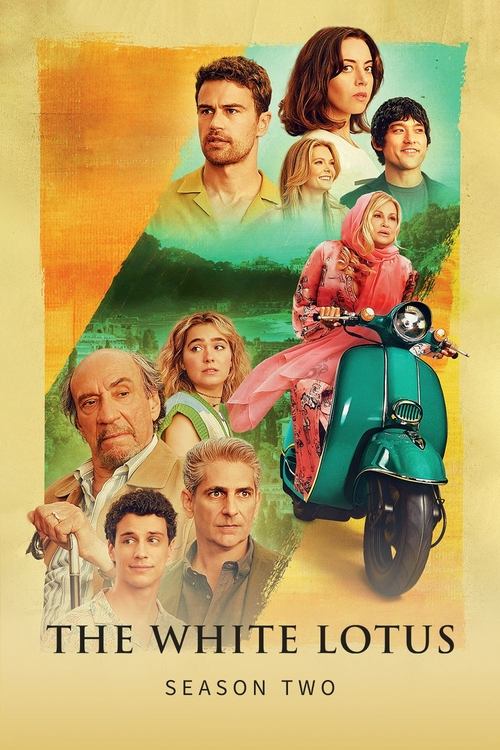
The White Lotus
Season 2 Analysis
Season Overview
Set at an exclusive Sicilian resort, follow the exploits of various guests and employees over the span of a week.
Season Review
Categorical Breakdown
The narrative’s primary division is based on wealth and class (affluent Western guests vs. local service workers), which aligns with the systemic oppression lens. The wealthy white males are largely depicted as either incompetent (Ethan) or toxic and corrupt (Cameron, Dominic). While race is a minor element, with Ethan being one of the few non-white guests and his character’s insecurities being linked to his new wealth, the main conflict is a battle of the sexes layered over the upstairs/downstairs class critique. Privilege is the central theme, but the intersectional hierarchy is less rigidly enforced than in a 10/10 scenario, as all characters, regardless of their background, are shown as morally bankrupt or exploitative.
The central dramatic engine is the merciless satire of American affluence and the moral rot of its elite class. The American characters are consistently portrayed as neurotic, unhappy, or vile philanderers, with their institutions (marriage, business) serving as cages for their misery. The local, non-Western culture (Sicilian) is not demonized; rather, the local characters (Lucia and Mia, the sex workers) are depicted as possessing a vital, uninhibited cunning that allows them to successfully outmaneuver the supposedly more sophisticated American tourists. This frames the 'home culture' (American elite) as fundamentally corrupt and spiritually dead compared to the more 'alive,' if morally ambiguous, foreign 'other.'
Gender dynamics are the most prominent theme of the season. Males are repeatedly portrayed as bumbling, toxic, and addicted to infidelity (Dominic, Bert) or as emotionally repressed and cuckolded (Ethan). The female characters—Harper, Daphne, Lucia, and Mia—are the central drivers of the plot and are all depicted as highly competent, strong, and capable of operating outside of traditional morality to achieve their desires. The local women (Lucia and Mia) subvert the 'victim' trope and consciously use their sexuality for power and financial gain, making them the season’s explicit 'Girl Boss' figures. Motherhood is not explicitly a 'prison,' but the season centers female fulfillment in transactional power and independence from traditional male structures.
The season centers alternative sexualities in significant plotlines. The hotel manager, Valentina, is a lesbian whose arc focuses on her professional power and her unrequited desire for a female employee, demonstrating a clear focus on a queer-centric plot. Furthermore, a major plot involves Tanya being lured to her death by a wealthy, international group of gay men who are explicitly depicted as conspirators and criminals, which subverts the trope of only portraying queer characters as virtuous victims. A gay character also abuses her position of power to sexually harass a subordinate. The intensity of sexual ideology is present, but the complex and villainous nature of the gay characters prevents a 10/10 score, as the show does not frame their identity as inherently virtuous or deserving of special protection.
The core morality of the show is subjective, rooted in 'power dynamics' and the 'corrosive impact of jealousy' rather than objective truth or a higher moral law. The characters operate in a purely secular, hedonistic vacuum where their actions are defined by desire, sex, and money. While the season is set in Catholic Sicily, the show’s critique does not directly target organized religion, with characters like the Di Grasso men only referencing their Italian-American religious heritage as a cultural footnote to their dysfunction. The absence of transcendent morality and the complete focus on worldly, subjective 'power dynamics' indicates a high spiritual vacuum score, even without explicit anti-Christian vilification.